
Why do we believe what we do?

Human beings are curious creatures. I’ve never met anyone who wakes up in the morning intending to believe something untrue. Yet sincere, intelligent and compassionate people can look at the same evidence and arrive at entirely different conclusions.
For a long time I have been intrigued by how we come to believe what we do. According to cognitive psychologists, our beliefs shape our values, which shape our attitudes, which in turn shape our actions. Put differently, belief lies at the heart of all that we think, feel and do.
Given how profoundly our beliefs influence our lives, isn’t it extraordinary how little time we spend examining how we came to hold them in the first place? We devote endless energy to defending our beliefs, debating them and acting on them. Yet we much more rarely stop to examine how we came to hold them in the first place.
I am fascinated, for example, that some Christians see all forms of same-sex unions as an abomination while others, equally sincere in their devotion, welcome gay and lesbian congregants with open arms. That some Buddhists would never countenance eating meat, while others, whose attainments are beyond question, will tuck into T-bone steaks with gusto. And why some atheists scarcely give God a second thought, while others devote enormous time and fervour to arguing against a being they are convinced does not exist.
Some people sincerely believe they hold no views that go beyond what has been conclusively proven. They assume that if there is insufficient evidence for something, they simply suspend judgement. Yet we all make assumptions. For example, some people are convinced that consciousness cannot continue after death because it depends entirely on brain function. But the proposition that consciousness arises solely from neural activity is a scientific hypothesis - not an established fact. An assumption made because of incomplete evidence.
To what extent are our beliefs simply an accident of birth? Had we been born into a Hindu family in Delhi, a Catholic family in Lima or a Zoroastrian family in Tehran, would we believe something quite different today? How often do we adopt beliefs because they make life feel safer or more comfortable? Or because questioning them would require us to rethink assumptions we have carried for years—or even to acknowledge inconvenient truths about ourselves?
One of the great blessings of living today is that, for many of us, we have an unprecedented freedom to explore. Never before has it been so easy to learn about different insights and ways of understanding the world. With a few keystrokes we can read passages from the Bhagavad Gita, the Tao Te Ching, and a great variety of philosophical and scientific leaders. We can watch and listen online to mystics, scholars and sceptics from around the world.
But how many of us actually do? We may spend weeks researching our next car, comparing fuel consumption, resale value and going on test drives. How often do we spend any meaningful amount of time exploring a different inner path? Might we, perhaps, even feel awkward or guilty in so doing?
The beliefs that interest me most of all - and you too, I expect - are those that operate at the meta level. Our beliefs about the nature of reality. That seems a logical place to begin. And it is here that the Buddha firmly places responsibility in our own hands.
By way of context, northern India in the Buddha’s day was alive with spiritual exploration. Wandering yogis, ascetics and philosophers travelled from town to town, each proclaiming that they alone had discovered the path to truth. Every teacher praised his own philosophy while dismissing the teachings of his rivals. It must have been an exhilarating time to be alive - but also an exhausting one.
The people of Kesaputta, home of the Kālāmas, had heard them all. By the time the Buddha arrived, they were understandably weary. They greeted him with a refreshingly honest question: “Every teacher who comes here tells us that his teaching is true and everyone else’s is false. How are we supposed to know whom to believe?”
The Buddha’s reply is one of the reasons I find him such an extraordinary teacher. He didn’t ask them to believe him because he claimed special insight. He didn’t appeal to his reputation or invite them to take his words on faith. Instead, he explained how to choose one’s beliefs in the first place.
More than two and a half thousand years later, his advice seems every bit as relevant as it did to those bewildered townsfolk. This is what he said:
“Do not believe in anything simply because you have heard it. Do not believe in anything simply because it is spoken and rumoured by many. Do not believe anything simply because it is found written in your religious books. Do not believe in anything merely on the authority of your teachers and elders. Do not believe in traditions because they have been handed down for many generations. But after observation and analysis, when you find that anything agrees with reason and is conducive to the good and benefit of one and all, then accept it and live up to it.” (The Kalama Sutta)
For those of us brought up in Christian homes, this advice can be quite confronting. Where I grew up, teachers, elders, history and tradition were all regarded as very powerful reasons to accept certain beliefs. If the Reverend Granville Morgan believed this, then who was a pip-squeak like me to question it? That would have been the unspoken assumption.
“Not so fast,” the Buddha might have replied. “Never underestimate a pip-squeak with a legitimate question. We were all pip-squeaks once!”
Only much later in life did I discover that the Bible has a rich and complex history. Modern scholarship has shown that its books were written over many centuries by different authors with different theological emphases; that the four Gospels were originally anonymous and only later came to bear the names Matthew, Mark, Luke and John; that they preserve different accounts of the same events; and that Christians themselves have never entirely agreed on which books belong in the biblical canon. Beyond the canon lie other early Christian writings—such as the Gnostic gospels—placing the emphasis not on correct belief but on inner awakening and direct spiritual insight. These offer strikingly different perspectives on some of Jesus’ central teachings - as Mary Magdalene’s Cat could tell you!
Far from diminishing my respect for the Bible, these discoveries only reinforced the wisdom of the Buddha’s advice: to examine our beliefs carefully, rather than accepting them simply because they have been handed down to us.
The Buddha didn’t only leave the Kālāmas with an instruction. He left them with an image they would never forget.
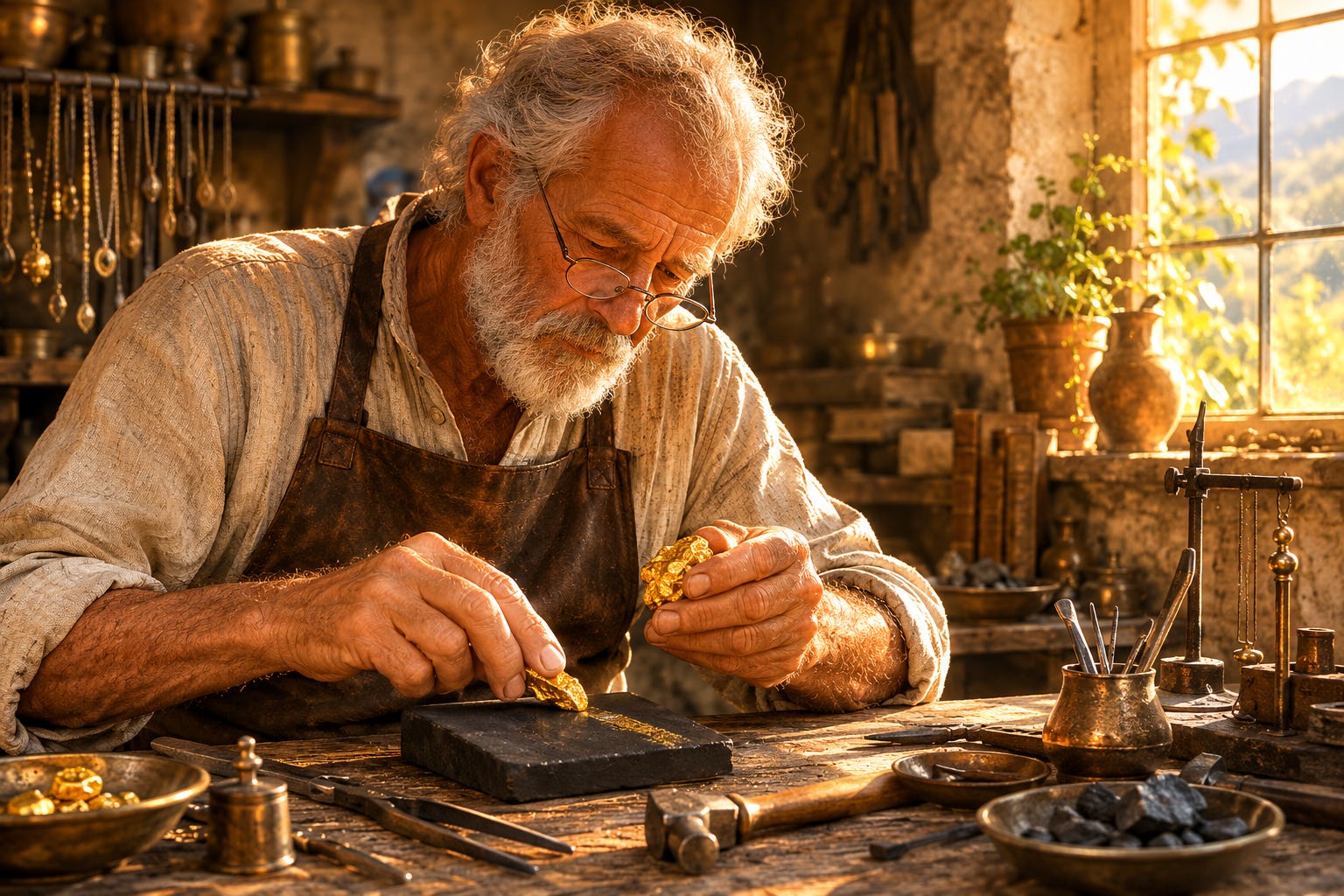
In taking up the Buddha’s advice, our own teachers also encourage us to regard our beliefs as a goldsmith regards gold. Not, paradoxically, because gold is assumed to be genuine, but because it is too precious not to be tested.
Before accepting a piece of gold as authentic, a skilled goldsmith doesn’t simply admire its appearance or rely on the seller’s assurances. He rubs it against a touchstone. He cuts into it to examine what lies beneath the surface. If necessary, he even places it in the fire. Only after surviving every test is it recognised as the real thing.
We are invited to treat our beliefs in exactly the same way. Don’t reject them out of hand. But don’t accept them uncritically either. Rub them against your own experience. Cut into them with careful enquiry. Place them in the fire of reason, compassion and lived experience. If, after all that, they continue to reveal wisdom, kindness and truth, then hold them with confidence—not because someone else told you they were true, but because you have discovered for yourself that they are.
Perhaps that was one of the Buddha’s greatest gifts: not a new set of beliefs to replace the ones we already have, but a way of relating to whatever beliefs we hold, irrespective of their origins, with wisdom, humility and courage.
In a world full of people eager to tell us what to believe, perhaps wisdom begins by learning how to choose our beliefs well.
And finally—my novelist’s imagination getting the better of me—I couldn’t resist wondering how the Buddha might express the Kalama Sutta if he were speaking to us today:
“Do not believe in anything simply because you saw it online. Do not believe in anything because it has gone viral or is repeated by hundreds of thousands of people. Do not believe anything simply because AI tells you, or because it appears at the top of your search results. Do not believe in anything merely because it is endorsed by influencers, reality TV stars or politicians. Do not believe something simply because it has become part of your culture or because everyone around you accepts it as true. But after careful observation and thoughtful examination, when you find that something accords with reason, compassion and the welfare of all, then accept it—and live by it.”
UPDATE FROM ROKPA SUPPORT NETWORK
Before we finish, I’m delighted to share a heartwarming update from ROKPA following our wheelchair appeal earlier this year. Thanks to your extraordinary generosity, three more wheelchairs have now reached people whose lives will be transformed by them. Every one is a reminder that compassion, when translated into action, can make a profound difference.
Over to Vivienne Kernohan from ROKPA:
More new Wheelchairs!
“All three families have expressed deep gratitude for your gift of wheelchairs, which has significantly improved their daily lives.
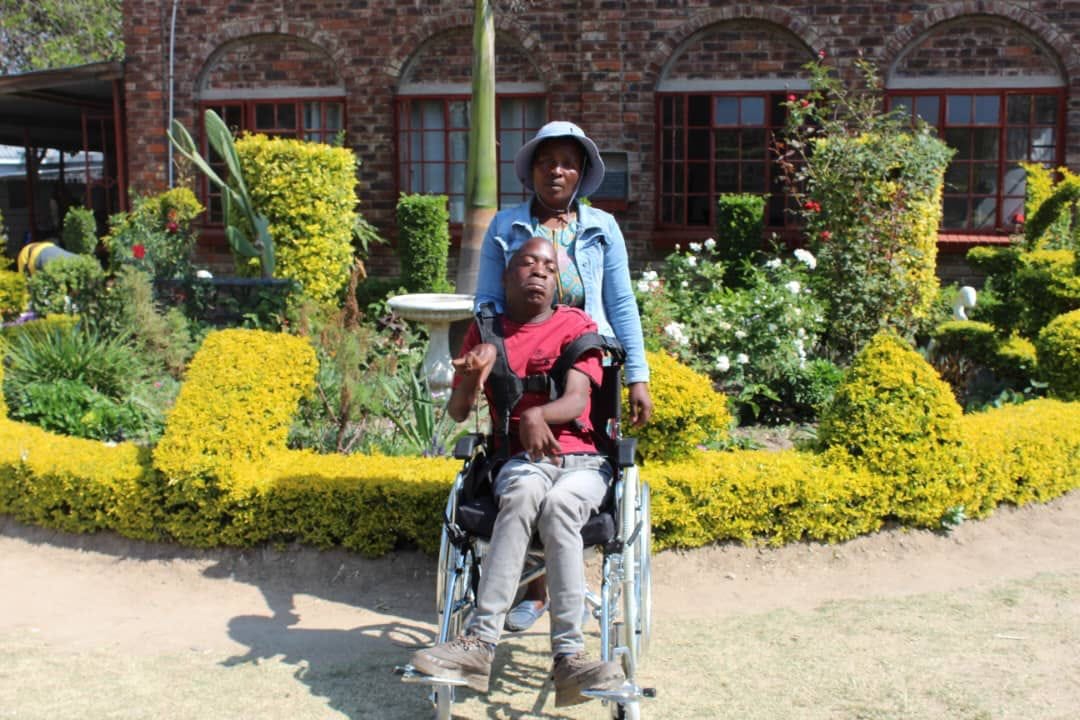
Photo: Tinashe and his mother in the new wheelchair at ROKPA Support Network in Chitungwiza
Tinashe’s previous wheelchair had deteriorated to the point of being a safety hazard, making it nearly impossible to manoeuvre. Due to his spastic muscles, wheelchairs tend to wear out quickly, and his mother explained that, ideally, he would need a replacement every three to four years, along with six-monthly servicing, costs that remain far beyond the family’s means.
The new wheelchair has brought transformative change. Tinashe is now able to accompany his mother to her vending stall, where he actively helps her sell fruits and vegetables, bringing joy to both of them.
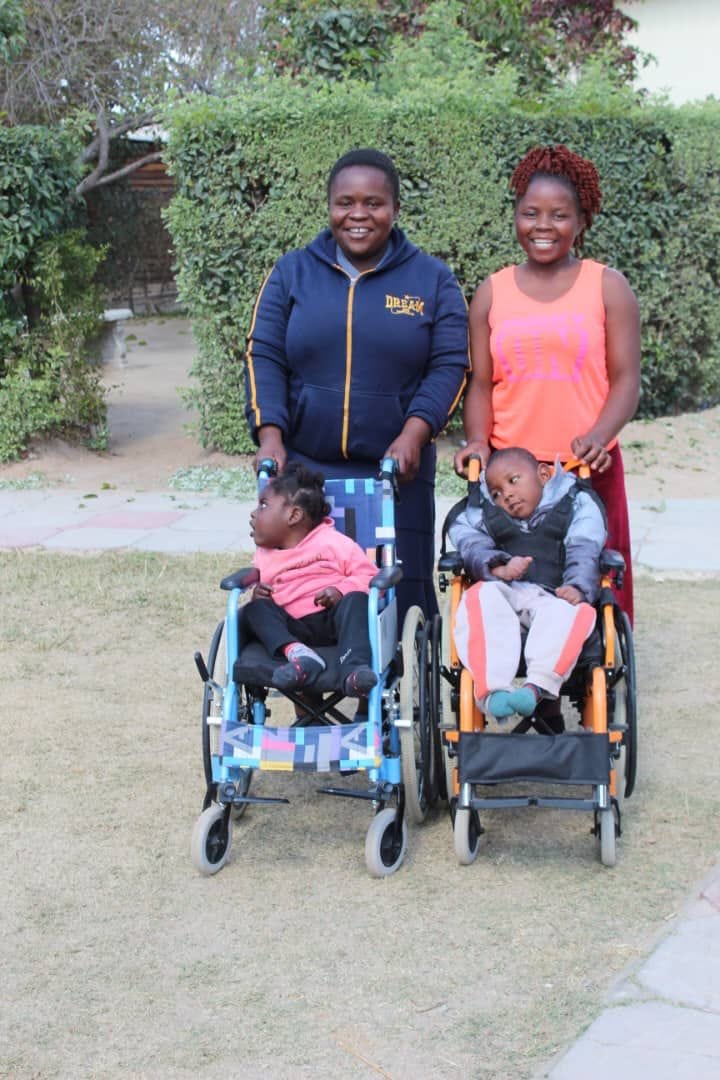
Photo: Shamma and Shein, whose mothers no longer have to carry them on their backs
Shamma and Shein’s mothers are equally relieved. Previously, they had to carry their children on their backs, but this had become increasingly physically demanding as the children grow.
The wheelchairs have eased the strain on the mothers, while also giving Shamma and Shein a meaningful degree of independence. they can now join in and play alongside other children while comfortably seated.”
May all beings have happiness and its true causes!
May all beings be free from suffering and its true causes!
Please feel free to share this post with anyone you feel may find in useful.
Yes, I've grappled with the same concepts for quite some time. The problem is that we grasp for certainty, or a way through the impermanence of our thoughts because we need to feel more in control in an ever changing world. But, in trying to pin down or stabilise that certainty, we end up with a full cup that won't accept any more tea. Then this craving for a single, absolute "right" answer can trap us in our heads, blocking our ability to simply experience the present moment.
I've used 'we' here, but I mean 'I', as this is something I'm constantly battling and trying to be evermore mindful about.
By the way David, can you remind me how much the wheelchairs for ROKPA are in $AUS?
Thank you again for this most wonderful post. 🙏
What a wonderful and insightful commentary you have shared with us this week! What you described is exactly what I experienced in my mid-fifties. A Life Event plunged me into years of deep deep examining of my entire belief system, modus operandi, whatever one wishes to call it, and today at age 83, I am still following that path. It has made all the difference!