

It’s been a crazy news week: an assassination in Utah, drones over Poland, the collapse of a French government, while Britain’s executive lurches from crisis to crisis. Plenty for the media to do what they do best—amplify fear, fuel outrage, and keep us hooked on the next breaking headline.
What do our lamas advise when the world goes off its rails? None of the following will surprise those who have followed my writing for a while. Still, when everything around us seems to tilt toward chaos, it can help to be reminded of the path. And in this post, I’d like to share a slightly different take on an old teaching, offered to me recently by my precious lama, Zasep Tulku Rinpoche, while we were together in Africa.
1. Revising our news sources — and the time we give them
When we feel overwhelmed by the news, the first question to ask is simple: how much of our attention does this deserve? If we’re in the Polish military or an FBI agent on the ground in Utah, close attention may be demanded. Most of us, though, are spectators.
The media want our attention because attention equals profit. I should know—I used to work in that world. From the media owner’s perspective, it’s all about grabbing and keeping people’s eyes. So the first step in easing existential overload is to disengage from the source of our anxiety. If watching TV news makes us miserable, why keep watching?
I stopped years ago—after meeting a TV station news director, the man who decides which stories run and how long they stay. He was, let me put it kindly, a pretentious braggart. No doubt clever and hardworking. But I found myself asking: is this someone whose values I share? Someone I admire? Would I want to give him half an hour every night to decide what I should consider important? Once that became clear, stepping away from the TV news was easy.
We don’t have to abandon the news altogether—only be deliberate about which sources we choose, and how much of our precious, limited attention we give them.
2. Rebalancing direct versus narrative mode
Psychologists tell us we exist in one of two states. Direct mode: attending to what streams through our senses. Narrative mode: attending to the stories of thought.
We may be sitting on a sunlit veranda in Maine, yet because we’re reading about events in Poland, we feel distraught. No one forces us to do so. Of course, it matters to understand something of the world. Some might even say it’s part of civic duty. But what’s gained by marinating our minds in troubling events over which we have no control? Aren’t we more likely to act wisely from a mind of benevolent equanimity?
One of the surest ways to shift back into direct mode is to step outside. Nature pulls us into presence—whether walking by water, sitting in a park, or standing under a tree. It’s like an organic form of meditation: the mind is coaxed into the here and now without effort. Music, gardening, quilting, meditation practice—all these doorways can help us reclaim the balance between narrative and direct.
3. Owning where our reality comes from
Each one of us is in the habit of assuming a direct line between an extremely limited perception of external reality and our own feelings. “The way things are in America right now,” is sometimes an opener in my comments box, after which a person will go on to express her deep forebodings. Of course, I know where she’s coming from - the thoughts and attitudes which shape her world.
But people with alternative attitudes see the world differently. Swap conceptual sunglasses and so would we. They don’t share our own deep forebodings – on the contrary, they may feel quite different.
Why this is important is to evidence that there’s nothing inevitable about our feelings. They aren’t caused by external reality, but by our thoughts about external reality. Interrogating those thoughts may be a helpful, if bracing exercise. However, the key point here is the degree to which we attend to such thoughts. The bandwidth we offer them. The hospitality we extend especially to our most negative cognition.
Most of us, if we’re honest, give far more attention to negative thoughts than to positive ones. A compliment breezes past. A criticism lingers, festers, multiplies. One hostile thought sparks another, until an entire storm cloud forms in our minds.
This is where much of our distress originates—not from “out there,” but from our preoccupation with negativity “in here.”
I came across the following reminder while recording my new book, The Good Karma Refuge for Elephants. In it, Rinpoche speaks with great clarity about the dangers of giving “free rent-space” to politicians we dislike but are stuck with:
“Having good leaders is not always possible. The karma of those we live among, the group karma, may be too strong. Perhaps you get stuck with rulers you can do nothing about – just like us Tibetans with the Chinese since the 1950s. None of us want them. We only want to be left to ourselves. But they are in charge. There is nothing we can do. So, do we spend our lives empowering evil beings to harm us even more by allowing them to occupy our minds? They won’t be harmed if we do, but we are damaged greatly. The more we obsess about them, the more we allow them into our thoughts, then the more habitual our anger and bitterness become. If we do this, we let them destroy our happiness – and not only in this life. We may create causes to be propelled into the worst possible rebirths.”
Rinpoche paused on the path leading away from the old stables. “What becomes of a consciousness in the habit of resentment when it is no longer anchored to a human body?” His eyes narrowed with intensity. “There are no limits to the realms of suffering such a mind can create.”
Taking ownership of where our inner world comes from is essential if we want to change it. External forces may be beyond us. But obsessing about them only gives them power to destroy our present and future happiness.
4. Stepping into our mental sovereignty — and our Brahma Vihāra
It is only once we stop being media-victims and take ownership of our reality that we can step into our mental sovereignty. Because whether we are aware of it or not, we are already the kings and queens of our own world. We each have a kingdom, and that kingdom is our life. There is no power greater in our personal reality, and that reality can be whatever we choose it to be.
What Rinpoche suggested, under the shade of a Kigelia tree near Victoria Falls, is that if we wish to experience reality in its most exquisite form, we should take refuge in an inner temple: the Brahma Vihāra—the “divine abodes,” or the four immeasurables. When we make these our source of reality, instead of some news director, we establish a wellspring that sustains us now and in whatever follows.
Loving-kindness: the wish for all beings to experience true happiness, without expectation of return.
Compassion: the wish to free all beings from suffering, knowing its causes are attachment, aversion, and ignorance.
Joy: the wish for all beings to taste the freedom of liberation.
Equanimity: the wish for all beings to abide in balance, free from clinging and aversion.
Cultivating these is no small project—it is the work of a lifetime. We first come to see them as worthwhile. Then we take them into daily life, one small action at a time. Step by step, they become embodied practice rather than lofty ideals.
A quiet revolution
So what do we do when the world goes crazy? We curate our news consumption. We spend more time in direct experience. We recognise that our feelings are not only dictated by events but shaped by thought. And we build our inner refuge on the foundation of the four immeasurables.
When the headlines scream, we can remember: our attention is the most powerful currency we own. Let’s spend it wisely. Let’s step out of the newsroom of the mind, return to what is actually here, and cultivate love, compassion, joy, and equanimity until they shape our lives.
By taking small, daily, and unstoppable steps, may we all we all remember that we are already the kings and queens of our own inner monarchies. Let us rule for the benefit of all living beings. Including ourselves!
I like to share regular updates from the non-profits we support. Usually these are upbeat impact reports. Recent news from Wild is Life/Zimbabwe Elephant Nursery is, unfortunately, not so good. As Roxy Danckwerts explains:
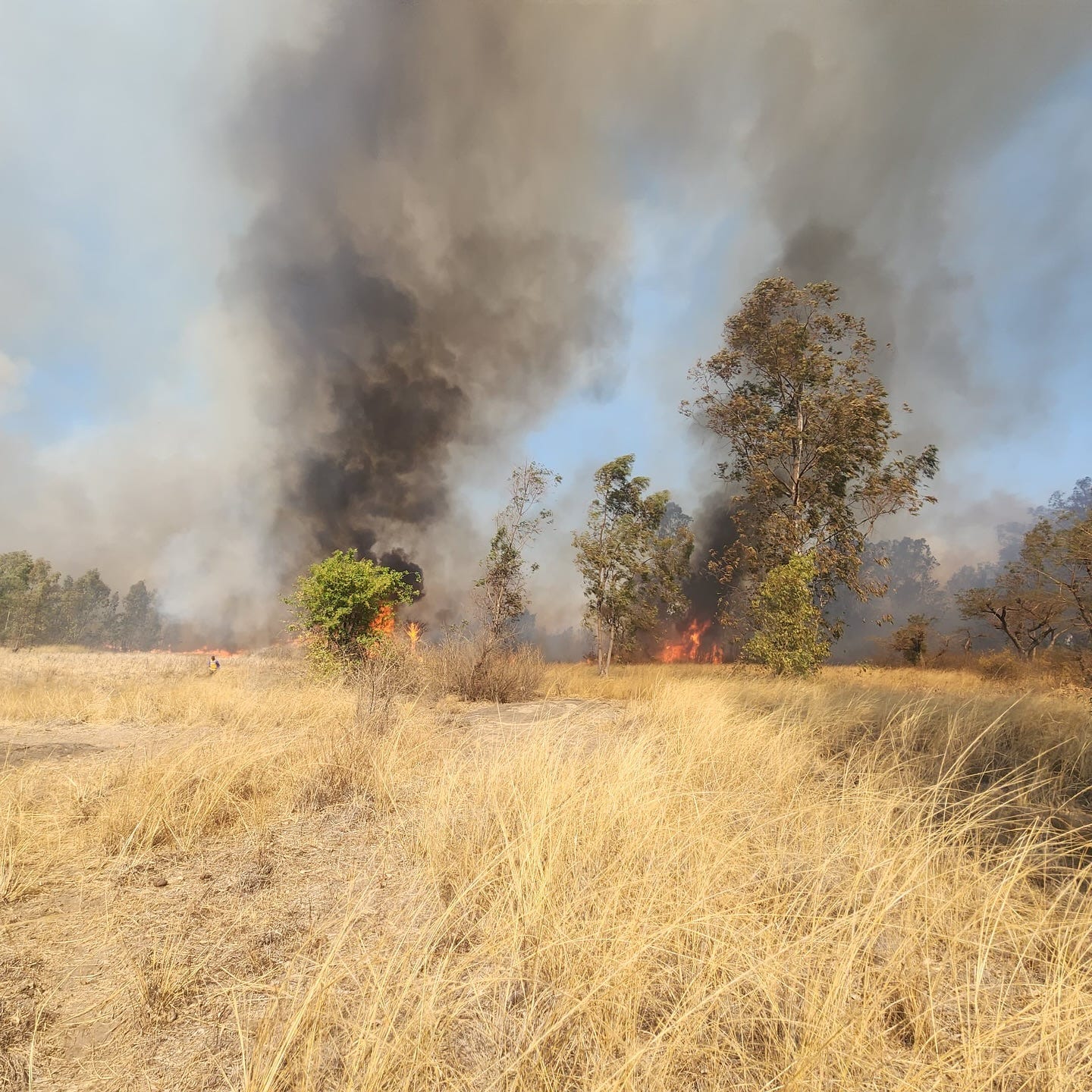
“A few days ago, an apocalyptic fire engulfed the farm next door to us. The winds were monumental, the humidity down at 12% and the gum trees just spat flames with anger. It was an aggressive and terrifying day.
Sadly, despite the heroic efforts of at least 500 farm workers, plus two fire engines from the air force, water carts from Bitumen World and Davis Granite, we were unable to contain the fire, which jumped the road and roared through our property.
Luckily, our main game park is protected with robust fireguards, but the fire destroyed all of our hay lands, shrubbery strips and bushveld.
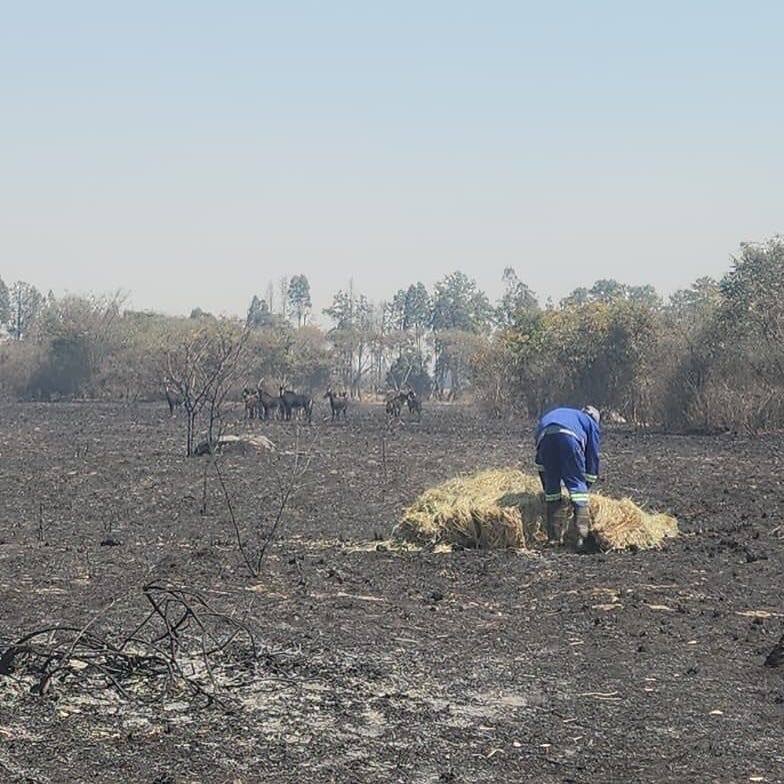
To this end, our ENTIRE dry season’s worth of browse for giraffe, elephant, plains game and others, has been eradicated. It is not a pretty sight and devastating to see beautiful indigenous trees burned and scarred. Let alone all the little wild animals, that would have been caught in the inferno.
We now need to bring in bales of lucerne hay to supplement the wildlife. This is hugely expensive and we need assistance.
I am not very good at asking for donations, so I do not write this post lightly.
If you are able to spare anything at all, please consider donating to support our animals during the hot and dry coming months.
I have lived on this farm for 40 years and have never seen a fire this rampant, nor explosive.
We have already made an effort to get haybales to the sable antelope who live next door, as they have nothing, whatsoever, to eat.
Thank you so much,
Love Rox xxx”


In response to Roxy’s request, I arranged a transfer of US$5,000 on behalf of us all to help buy in hay for the browsing animals, like the sable, wildebeest, kudu, giraffe and others. Roxy and Jos wrote back immediately expressing their gratitude.
Our collective donation will go some way to helping feed the animals until the next rainy season starts in November.
But if any of you would like to donate directly to Wild is Life/Zimbabwe Elephant Nursery, as part of your own inner refuge, you can do so here:
May all beings be free from suffering!
Please feel free to share this post with anyone who may benefit from it:
Thank you David. I must admit that I spend far too much time looking at the news. Our South African news is horrifying at the moment, if you don’t listen you could miss something important and it seems like every hour, something new happens. I also watch what is going on in the UK because my sister, daughter and granddaughter plus a whole lot of friends. They just seem to be stumbling along.
I know it’s wrong but I like to stay informed.
I do however, switch it off and take time to appreciate my new garden and the wildlife. I was putting breadcrumbs out the whole day yesterday. I have sparrows, weavers, laughing doves, rock pigeons, wagtails and thrushes coming down to eat. From my bed I watch a air of African Hoopoes flying off in search of food for their young ones which are under the barge board on the roof of the laundry.
Last night I heard a different sound and my mongoose was gorging himself on the ones I put out before going to bed for the birds to feed on in the morning. He scoffed the lot. Nice to see.
Sorry about the fires, absolutely terrible. Poor animals, but this is the proof of impermanence. If they do manage to get some rain the brand new rich green grass will grow with the nitrogen from the fires ashes. The game will love munching that. The trees are so resilient that they will come back as beautiful as before. The wonder of nature keeping everything in balance.
Thank you! Your books and reading your weekly column have helped me maintain balance for so many years now. I can’t wait to read your new book. I’ve given up on TV news and now need to stop checking the internet so often. I’ll use your suggestions to help me break this habit. I’m so sorry about the devastating fires and appreciate your donation. I sent an additional amount that I hope will help feed the animals. Best wishes to you as always.