


I was stopped in my tracks when asked this question recently. Okay, no one was demanding an immediate answer. It wasn’t a case of having a microphone shoved in the face. It was, rather, a hypothetical inquiry asked by our Dharma teacher as he sat at the front of the gompa on the teaching throne. But it did its job – it got me thinking. As I hope it may get you thinking too!
Some people have no problem answering it. “My kids,” they may say reflexively. “Moving to such and such a place.” Or “selling the business for X dollars.”
Conventional answers of different kinds. While there’s nothing wrong with them, I had the sense that the lama’s query was pitched differently. That he was more interested in our inner journey.
He confirmed this by repeating the question from a different angle: “What’s the most powerful virtuous karma you’ve created?”
I began thinking about my practice and whatever positive changes I might tentatively lay claim to. I couldn’t think of many. Letting go of ingrained negative habits and cultivating virtuous ones is truly the journey of a lifetime. Like everyone else, I have my ups and downs. Sure I can point to some incremental improvements. But an outstanding highlight? A defining moment of greatness? That was hard to pinpoint. Going by the expressions of my fellow students, it was the same for them too.
The lama observed our bemused faces with customary lightness. Before putting us out of our misery.
“The greatest thing each of you did happened before I met you. You probably don’t think of it as the breakthrough that it turned out to be. It probably happened because you suffered a setback. Maybe a shocking experience of loss, or rejection, or a terrible diagnosis. Or perhaps something less dramatic. The way it happened is different for everyone. But the result is the same.”
He began sharing stories of what had happened to some of us in the room. A father who had lost a beloved child in a car accident. A mother whose grandchildren were shot in a random robbery that went wrong.
Writing this, I realise how many such stories have been shared among our newsletter community right here: The woman who lost her house to a wildfire. The man who had no sooner seen through the truly heart-wrenching decision of having his wife admitted to a care facility because of her progressing dementia than he lost his son. The parents whose teenaged boy committed suicide.
Our own personal story of loss or heartbreak may be less headline-grabbing than these. The drama itself is usually what commands our attention. What our teacher reminded us that day was that what really mattered was not so much the catalyst than what we did with it. The action it prompted. Which he summarised in three words: “You came here!”
He was, of course, talking figuratively, not literally. The greatest karma we ever created, the best thing we ever did was when we decided: Enough! I’m through with this! What I am experiencing is unendurable. Unacceptable. Something’s got to change.
How each of us framed this as we passed through our own dark night of the soul will have varied. It almost certainly wasn’t the product of reasoned analysis. We may well have explored all kinds of other dead ends for months or even years. It probably wasn’t a case of emerging from a season of desperate grief or trauma and thinking to ourselves in a moment of blinding clarity: “I am going to use this mud to fuel a journey of transcendence to become a lotus.”
But that’s what we have ended up doing. Having faced the collapse in what we once assumed gave life its meaning, in some way and by some means, we came to recognise that keeping on following the herd, sleepwalking through the existence seemingly set out by our culture, our family or our community, was no longer an option.
That was our greatest achievement. The very best karma we created.
We could have gone a different way. We don’t have to look too far to see people being destroyed by suffering. Who have never found a way through loss and are trying to block the pain with booze or drugs, propelled down an ever-deepening spiral.
Others may be better at masking or more subtle at self-medication, but who still limp through life, their potential passing them by, as Thoreau described in 1854 with his bleak observation: “The mass of men lead lives of quiet desperation.”
Rather than caving in, we could also have misdiagnosed our problem. We may have believed the causes of our suffering to be outside us. We may have felt outraged and aggrieved about those responsible for road safety, or fire prevention management or medical facilities, bitterly resenting them as the root source of our woes. Or alternatively, we may have thrown ourselves into campaigning vigorously to improve such services.
While it is entirely appropriate to take positive action in conventional ways, our greatest accomplishment was the accuracy of our diagnosis which laid the foundation for all future treatment. Which is that our root problems lie not outside ourselves, but within.
We may have been forced to this recognition by terrible events that appeared to come from the outside world. But somewhere along the way we discover that suffering, like happiness, is an inside job. Pain may be forced upon us by circumstance, but whether we continue to suffer, to carry the pain, is up to us.
When we realise this, we open up a new path to healing. When, in the lama’s words, we ‘come here,’ we are willing to explore the nature of mind and reality and how one gives rise to the other. And as we do this, under the care of those qualified to guide us, in time we come to a surprising and magnificent recognition.
Rather than the tragically diminished version of ourselves that we have always believed in, this small, human tale of a body with an attached biography, who has been here and done that and suffered this or that particular trauma, our real nature is something altogether different. We know this to be true because we catch glimpses of it when we meditate. ‘Tasted’ its qualities sufficiently to know it to be real.
Our true nature is one of boundless consciousness, beyond time and space. A presence when, free from agitation and dullness, abides in a state of deep peace. This is the conventional nature of our mind that is formless – ‘unborn and unceasing’ as it’s sometimes described, meaning simply that it is always there, beyond birth or death. An utterly different, and dramatically more panoramic experience of who we are and what might be possible than the narrow ‘self’ we assumed before our troubles.
As we sat in the gompa that day, struggling to think of some particular meditative or other breakthrough that was our greatest achievement, we completely missed the point. Of the eight billion humans on the planet, how many have found their way through suffering to such a dramatically revised view of reality? How many lead lives of quiet or not so quiet desperation, on the one hand, or on the other, believe all their troubles to be externally-caused? By contrast, how extraordinary is it to have come to the recognition that mind itself drives our experience of reality and that by taking charge of one, we transform the other?
In stories and articles I often focus on the granular details of the workings of karma, methods to cultivate greater equanimity and suchlike. The stuff of mind-training and thought-transformation.
But let’s not allow the detail of this to get in the way of the more vitally important fact: you’re here! Me too. This is our greatest achievement. We have set ourselves on a trajectory that is, at once, radical and ancient. Let’s recognise this and celebrate the fact!
And let’s never forget all those who haven’t been so fortunate. Who have yet to find their way. We know all too well what it’s like to suffer. So, how may we best support them? It is precisely this impulse we harness when cultivating bodhichitta. About which more in my post next week.
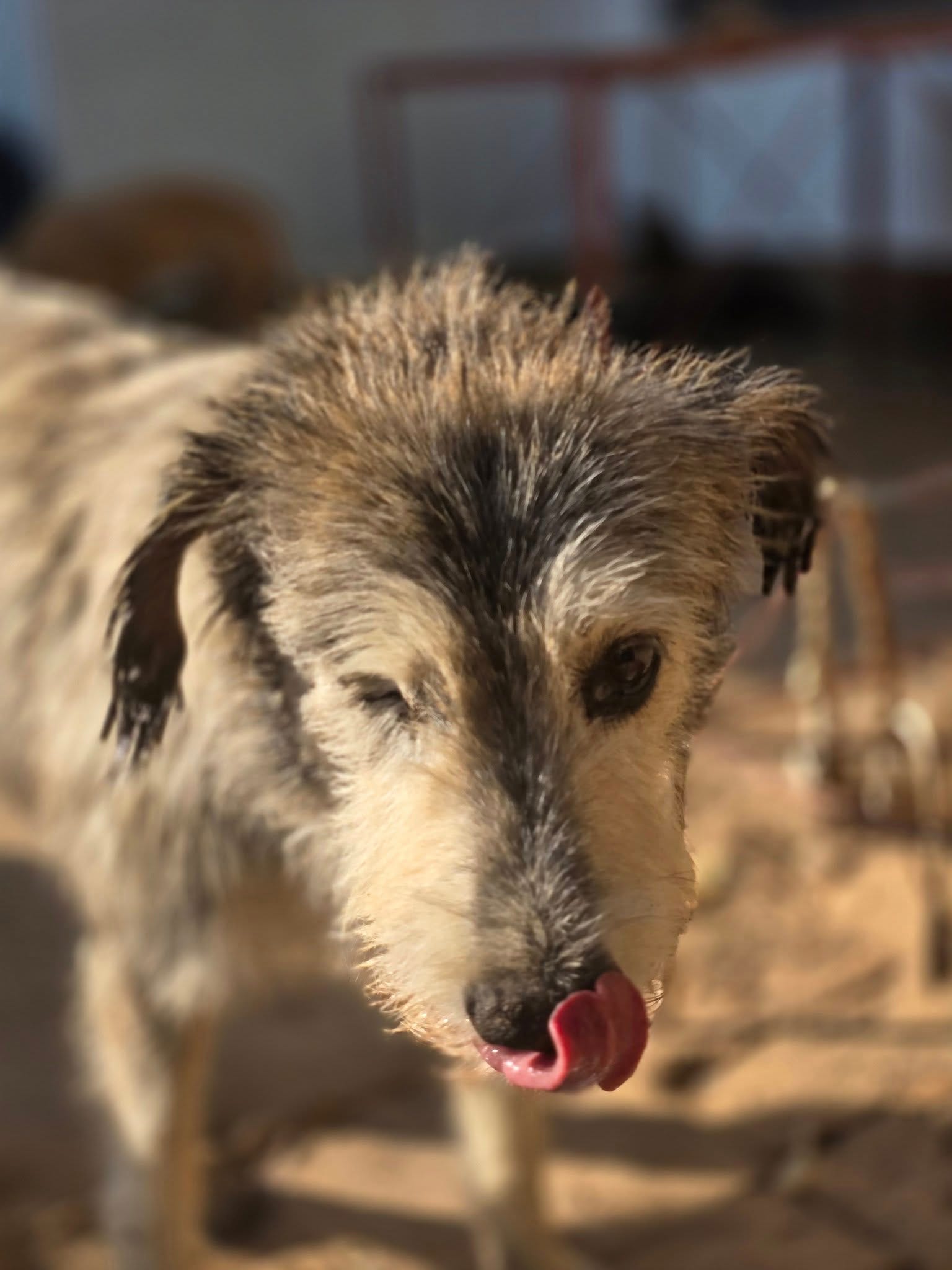
A few images of the dogs we are helping support at Twala Trust in Zimbabwe. I love the captions provided by Sarah, giving us entertaining insights into the personalities of each one.
Above: “One eyed Foxy, glamour queen, cuddler, volunteer favourite.
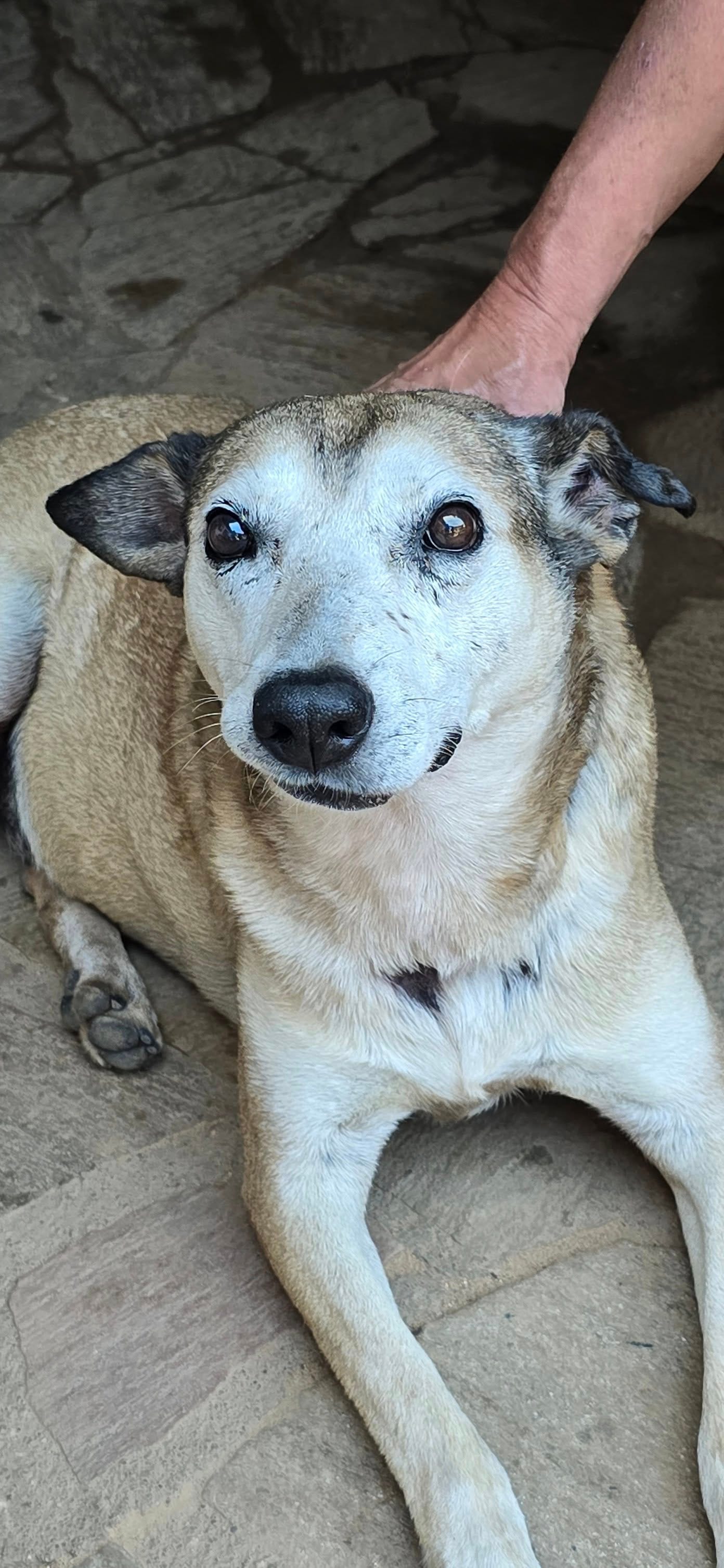
Our resident old rogue, Trick. Still thinks he's a teenage hoodlum, swaggers like a mobster, would ride a big motorbike and wear leather vests if he was a human.

Most beloved Tinkerbelle, who survived unimaginable cruelty to begin a new life at Twala, and now fighting a battle against cancer. This is the bravest girl, receiving specialist care and so much love.
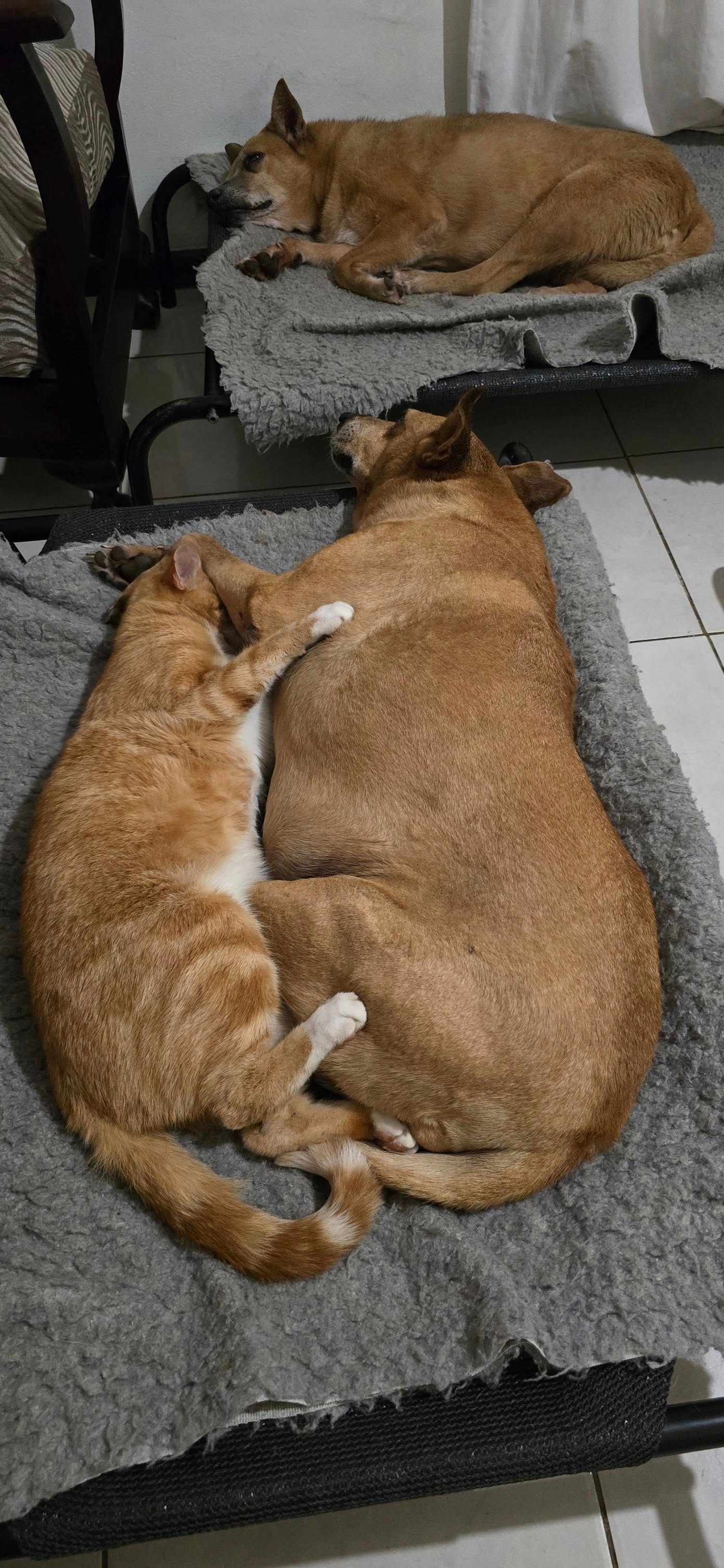
How life should be for old dogs - and cats! Comfort, companionship and sweet dreams.”
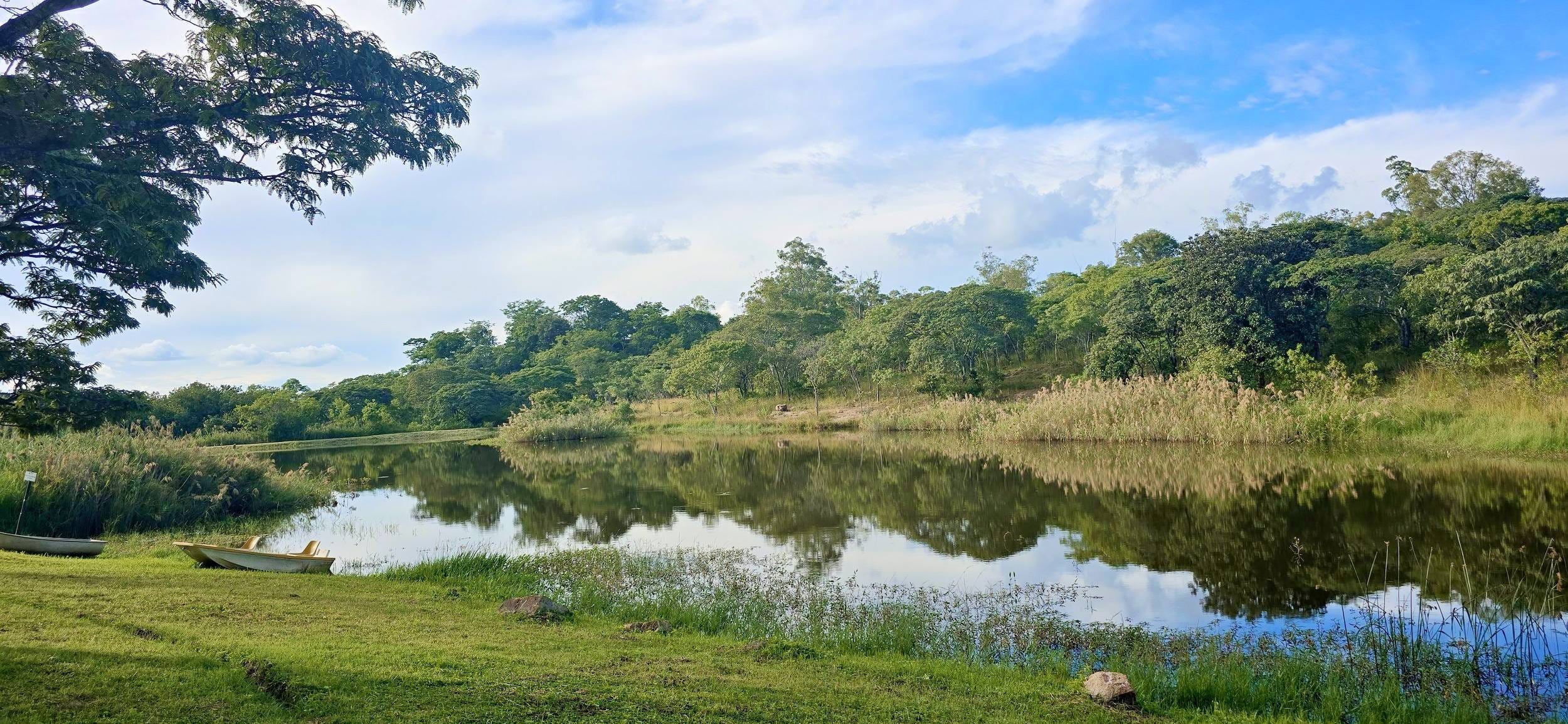
Twala Trust Animal Sanctuary - April 2025.
May all beings have happiness and its causes!
May all beings be free from suffering!
The greatest thing I have ever done is also the most difficult: forgiving myself and others.
After a difficult couple of years of loss I have finally moved my life into an assisted living cottage on a lovely complex of loving and friendly people.
It is smaller than what I am used to, but very cosy. I think I could be happy here.
I had to leave my little dog with a friend and he seems to be fitting in there, I am happy to say. I miss him very much.
I think I have made the correct choice, so will explore it some more and find its treasures in the garden.
I was even greeted by a little face in my doorway, that of a wild mongoose and have seen him again in the car park. I threw out some bread crumbs and am having fun watching 5 or 6 little sparrows and a thrush nibbling away at them. Thank you David.