

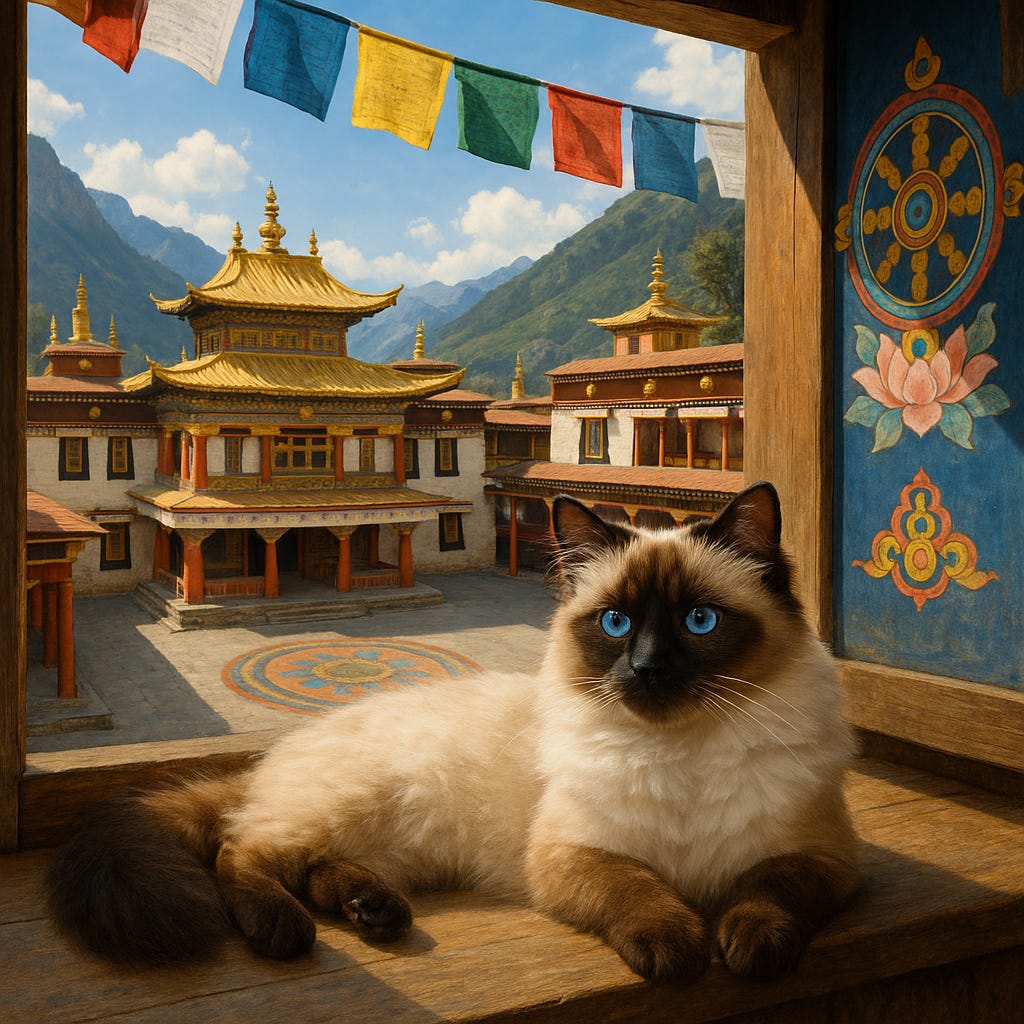
(AI illustration courtesy of Le Chat GTP)
Thank you so much for all the comments on the guided nature video I shared last weekend!
It’s been a while since we heard from the Dalai Lama’s Cat. This week she resurfaced from a long doze with the following mouse-size musing. I hope you enjoy it!
Predictability: such an over-rated quality. And not an accusation you can level against us cats. We do, of course have our favourite habits and hidey holes, our passions and preferences. But predictable? The ways of a cat will always be as mysterious to the human mind as our infinite capacity to surprise. I know this to be true, dear reader, because there are some times that I surprise even myself.
Late afternoon in the Dalai Lama’s office. One of my favourite rituals of the day. His Holiness’s Executive Assistants, Tenzin and Oliver arrive with a tray of tea – on this occasion accompanied by a plate of hazelnut biscotti courtesy of Mrs. Trinci.
As always, Oliver assumes the role of tea-pourer while the Dalai Lama joins them around a coffee table. The day’s main activities are discussed. Responses to invitations. Requests from monasteries. Plans for future teachings.
For over a decade I have occupied my particular spot on the broad window ledge, watching how the late glow of the afternoon sun cast long shadows across Namgyal Monastery courtyard. Taking in the subtle tang of rhododendron and Himalayan pine wafting on a gentle breeze. Eavesdropping on numberless conversations around the table.
Feeling like something different, I flopped on my side, hitched myself towards the inside edge of the sill, and lay with my head tilting backwards, so that I was regarding the three men upside down.
Tenzin, mid-way through briefing His Holiness about an exchange with King Charles III, paused for a moment. Before nodding in my direction.
“She’s never done that before,” he observed.
The two others turned to look at me. Whereupon I lifted both front legs and let them dangle languidly in front of me.
They chuckled.
“Perhaps,” Oliver ventured, “she is reminding us to relax.”
“Doesn’t she always?” Tenzin was his usual, droll self.
“And as usual,” the Dalai Lama’s voice was warm with appreciation, “in her own unique way.”
Conversation moved on. I continued to dangle. After a while, re-arranging myself by stretching out across the sill, I allowed one front leg to fall towards the carpet. At His Holiness’s request, Oliver was reading a paragraph from a verse by Saraha he had been translating from Sanskrit. The King’s Doha contained lines of exquisite beauty and meaning, and as he read them, Tenzin gazed into the mid-distance in concentration, while the Dalai Lama closed his eyes, a serene smile lighting his features.
After Oliver finished, His Holiness nodded. “Beautiful,” he told Oliver. “You have captured not only the essence of Saraha’s meaning, but the rare quality of his writing.”
“Indeed,” nodded Tenzin, Dalai Lama’s former translator who now took care of diplomatic contact. “Very much better than I could have done. Oliver has the highest sensitivity not only to words and their meaning, but to their context, to the voice of the author.”
“Really,” Oliver shifted in his seat. “You are being too kind.”
“You have a very special capacity for this work,” Tenzin was not to be silenced.
In the late afternoon glow, His Holiness nodded. “It is Oliver’s kham,” he said simply.
Meeting the Dalai Lama’s observant expression, Oliver’s blue eyes gleamed.
“And how wonderful,” continued His Holiness, “that you are using it for the benefit of all living beings.”
Only days before, I had heard Franc, deep in conversation with his bookstore manager, Sam, on the subject of kham. It had been Sam’s responsiveness to a customer that had prompted the exchange. The customer, an argumentative Brooklynite, had come in demanding a book on how to empty your mind while meditating. He had been unable to find any such book in Sam’s well-stocked store.
Sam had patiently asked where his idea about emptying the mind came from. Sam had gently nudged the visitor to consider that an empty mind may not be the goal of meditation. And importantly, that emptiness itself was a different subject entirely. That the subject of emptiness, or shunyata was, in fact, very much more exciting and reality-changing than sitting in lizard-like meditation.
Little by little, his customer had begun first, to understand, and then to become quite animated by Sam’s insights. By the time he left, he had bought five books and promised to return the next day with several fellow travellers to continue the conversation.
“Some people are born meditators,” Franc had told Sam that day. “Others thrive in study. Some love ritual or are natural teachers. But you,” he squeezed Sam’s shoulder appreciatively, “your kham is connecting people to sources of wisdom.”
“That’s a kham?” Sam had seemed taken aback by the idea.
“What else is it?” asked Franc. “I like what Dilgo Khyentse Rinpoche says: ‘The Dharma is infinite. Everyone has their own entrance.’ The world of books.” Franc gestured the shelves. “Texts. Insights shared through the written word. That’s your entrance.”
“I suppose it is,” mused Sam.
“A person’s kham is their particular disposition for following the path,” Franc continued. Their receptivity. Their inner capacity. It’s how their karma aligns them.”
“’Awareness expresses itself in forms suited to the capacity, or kham, of beings’” Sam quoted effortlessly. “‘The same wisdom that arises as silence in one may arise as a thousand words in another.’”
“Sounds like Rumi,” said Franc.
“There are a thousand ways to kneel and kiss the earth’ was Rumi,” said Sam. “Similar meaning. But that quote was from Longchenpa, the famous Dzongchen master.”
“You see,” Franc shrugged his shoulders, the truth too obvious to require elaboration. “You know this stuff. You can pull it all together.”
“It’s just I’d never really thought of it as a kham.”
“That’s the thing about khams,” Franc nodded. “People often don’t recognise what their own kham is, even though it may be obvious to everyone else.”
Franc went on to talk about how just as different seeds grow in different soils, so too the Dharma is practiced according to the disposition, or kham, of beings. Some practitioners are more inclined to study and reasoning. Others are more devotional. Recognising our own inclinations and proclivities, our kham, is very useful. Because when we venture along an inner path that aligns with our natural enthusiasms and interests, how much further are we likely to travel? How much more willing will we be to apply ourselves and do whatever is needed to attain meaningful results? How much more joy will we take in our unfolding journey?
Some of these ideas about khams passed through my mind as I observed the Dalai Lama and his two Executive Assistants that afternoon.
Oliver, having just been applauded for exercising his own kham, was quick to deflect attention.
“I may have an ear for language,” he admitted. “But you, Tenzin, are a master of diplomacy.”
His Holiness chuckled. “Yes, yes!” he agreed. “You know how to take the heat out of the room.”
“Remember that time with the US Ambassador?!’ Oliver reminded them.
The three men burst out laughing.
Engaging as their conversation had been, and as intriguing as the reminder of khams was, I couldn’t avoid a certain pang of regret. The Dalai Lama existed on a level well beyond ordinary mortals. Oliver and Tenzin very evidently had their own khams, their own particular talents, dispositions and abilities that they brought to their inner journeys.
But what about me? I may very well be sumptuous and possessed of a serene elegance. A being at whose velvet paws humans quite naturally paused in deference. But a kham? I didn’t think I had one of those. I began to feel wanting.
As if on cue, His Holiness turned to where I lay draped from the windowsill.
“Of course, my Snow Lion has a very special kham.”
She does?
“Fully on display even at this minute!” chimed Oliver.
“Yes,” even Tenzin agreed, before going on to explain. “It’s impossible to look at her without feeling relaxed.”
No longer content to sit, The Dalai Lama got up from his chair, came over to me and scooped me into his arms, so that we were both looking out the window to the Kangra valley.
“She draws us back to this moment,” he murmured. “Away from whatever thoughts may have been preoccupying us. She constant reminds us of the peace to be found simply by experiencing this moment through our senses.”
As we stood together in the twilight, I purred in throaty appreciation. I recalled Franc’s conversation with Sam: That’s the thing about khams. People often don’t recognise what their own kham is, even though it may be obvious to everyone else.
It seemed that embodying mindfulness, relaxing elegantly into the moment was a capacity that was so utterly natural to me, I was hardly even aware of it. All these years I had been oblivious to my own special gift. As His Holiness and I took in the evening, the revelation seemed both extraordinary as well as entirely natural.
Drawing people back to the moment. Making beings feel relaxed. That’s my kham. Of far greater importance to you personally, dear reader, what is yours?
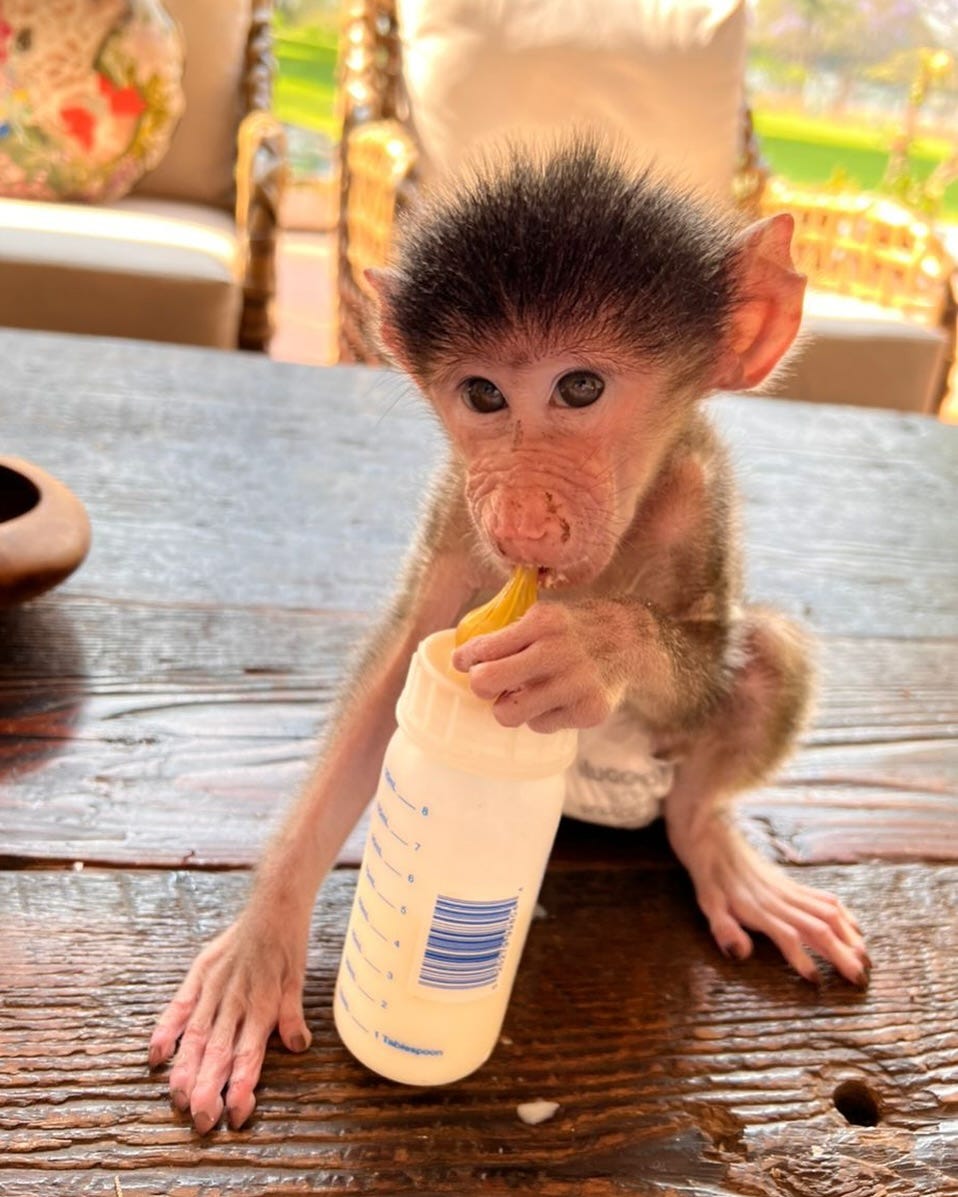
Some photos from our friends at Wild is Life/Zimbabwe Elephant Nursery, which you support as a paying subscriber of this newsletter.
Heartfelt thanks from all the orphaned sentient beings, and those who care for them for your loyal and continued support.
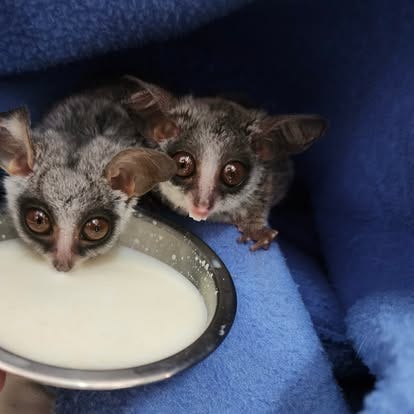
‘Pookies’ or night-apes enjoying a drink.
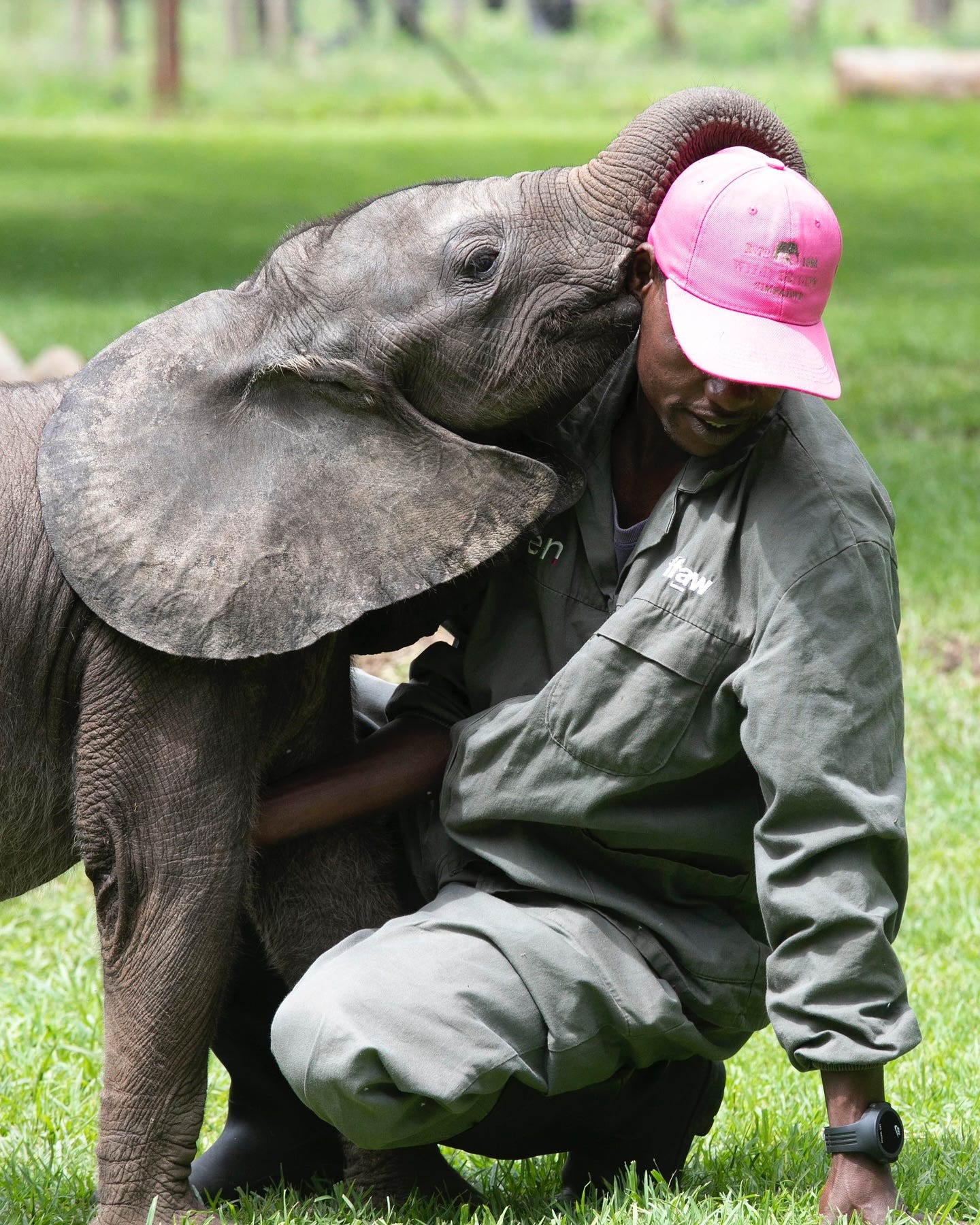
All beings wish to give and receive affection!
So wonderful to hear from HHC! I've missed her! This is a very good teaching today. I am pondering the idea of kham; the very ponderings are allowing me to just 'be' , which is a very good thing! Maybe it's not to actively seek what it is but to slow enough to let it surround us? And then perhaps we get a peek as it comes 'round. Thank you for this David!
Oh my!! Thank you sweet Kitty! To be aware of our khan can only serve to help us. So easy to forget our journey isn’t just about striving. It’s about being.
Many thanks, dear David Michie. Every visit from HH sweet cat helps me so much! 🙏🏽🪷☀️