

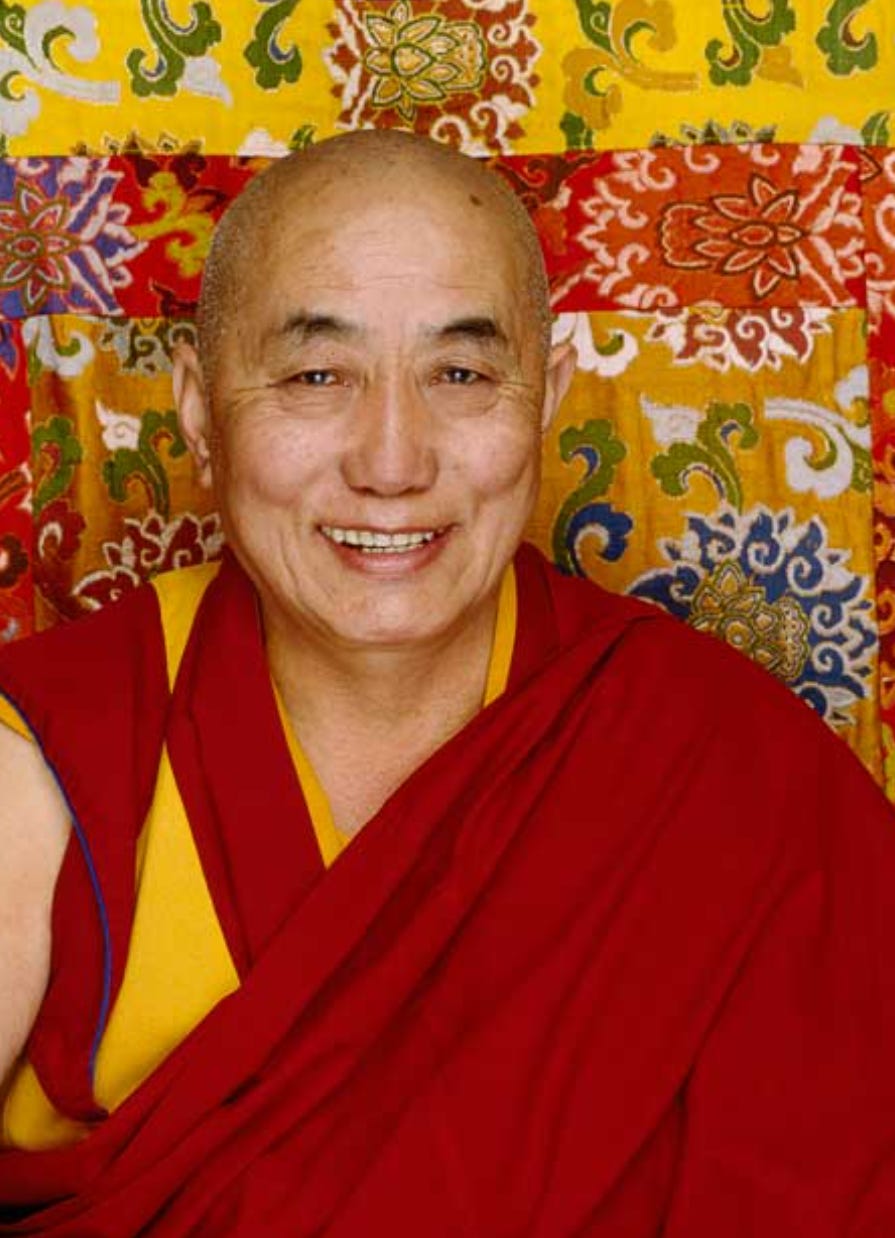
Photo: Geshe Acharya Thubten Loden: Founder of The Tibetan Buddhist Society
I will never forget the first time I met Geshe Acharya Thubten Loden - or Geshe-la as he was known with affectionate regard by his students.
I live in Perth and Geshe-la lived in Melbourne, a four hour flight away. My kind and wise teacher, Les Sheehy, had already been a student of Geshe-la’s for decades. When I told Les that I was visiting Melbourne, he suggested I call on Geshe-la to pay my respects to the founder of our Tibetan Buddhist Society.
Little did I know how much of an influence Geshe-la was to have on my life, through the initiations he generously offered each year, his extraordinary books, through his heart student Les and through the direct encounters I was privileged to have with him.
I had, of course, heard many stories about this extraordinary being, the great scholar and meditation practitioner who was a contemporary of the Dalai Lama’s - they had shared the same tutor Lama Trijang Rinpoche. Geshe-la seemed to have emerged from a different time and place, a different world, behind the soaring Himalayas.
The moment finally arrived when I was shown up the stairs to his apartment by another of his students. My wife, Koala, was with us - she had come to say hello before leaving me with him for a short audience.
Greetings exchanged, the door closed. Geshe-la gestured for me to sit on a cushion on the carpeted floor facing him. It was late morning and it felt like there was no need for words. For a few moments we sat in serene silence, sunshine glowing through the window, absorbed in a beautiful energy like milk and honey.
Then Geshe-la raised his right hand and pointed to the door where my wife had been standing. “This one,” he said, and I knew he meant Koala. “If you ever have a relationship with another woman, she will know.”
As I came to learn, that was classic Geshe-la! He had the most extraodinary presence. A capacity to evoke all manner of feelings including boundless warmth and affection. And along with that, he was entirely unpredictable. You could never guess what he was about to say next. I have come to recognise these as the hallmarks of those who perceive our reality in a a quite different way than we do!
How to summarise some of the main things I learned from Geshe-la in just a few points?
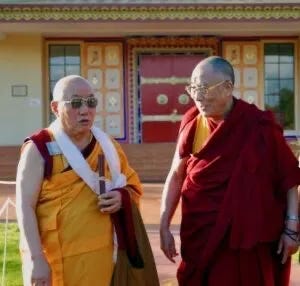
Photo: The Dalai Lama was guest of honour at the opening of the Melbourne temple
Keep it real
The immediate teaching that comes to mind, thinking about Geshe-la, was his straightforward, down-to-earth, uncompromising authenticity. If you aren’t interested in the Dharma, that’s your choice. But if are interested, he expected you to do the work. To listen, read, study, meditate and set about the business of personal transformation. Otherwise, what’s the point?
If Geshe-la sounds ‘old school,’ that’s because he was. Born in Tibet in 1924, he experienced austerities of an order unimaginable to most of us. These included fleeing through the Himalayas in 1959, without proper provisions or clothing, being pursued by Red Army soldiers. So desperate was their hunger, several of his fellow monks took to cutting strips of leather from their boots to chew – a detail I include in my novel The Magician of Lhasa.
Given his background and training, Geshe-la had little tolerance for laziness or emotional excess. When one of his students asked questions during class about a course he had been teaching for some weeks, Geshe-la asked her to fetch her copy of the relevant text. Surprised by the unusual request – Geshe-la’s own copy of the book was open, right in front of him - the young woman returned from her room with her own volume. Geshe-la lifted it in his hands and flicked through its pristine, uncut pages, before handing it back to her in silence. He didn’t have to say anything. His response to her question could hardly be clearer.
On a different occasion, one of his most devoted students, cooking lunch for over 100 retreatants, was looking distressed in the kitchen when Geshe-la stopped by and asked if there was a problem. “We’re doing vegetable tagine and I’ve just found we have no lemon!” explained the student. Geshe-la needed little time to consider this before shrugging. “No lemon,” he said in his Tibetan English, “death not happening.”
For many of us this has become a catchphrase. Faced with a similar mundane disaster, instead of getting caught up in a vortex of futile emotion, better to remind oneself: “No lemon, death not happening.”
Geshe-la walked the talk. Whenever you visited him for a personal audience, he would hand you a small gift as you left – a box of chocolates, perhaps, or biscuits. It didn’t matter that these were re-gifted offerings that he, himself had recently received. He was showing you how to do things.
Even after empowerment ceremonies, when he had just bestowed on you the most extraordinary gift of your inner life, after presenting with him a traditional khata (white scarf), he would typically have a large basket filled with apples or pears, one for each student. They tasted all the sweeter with the guru’s blessing!
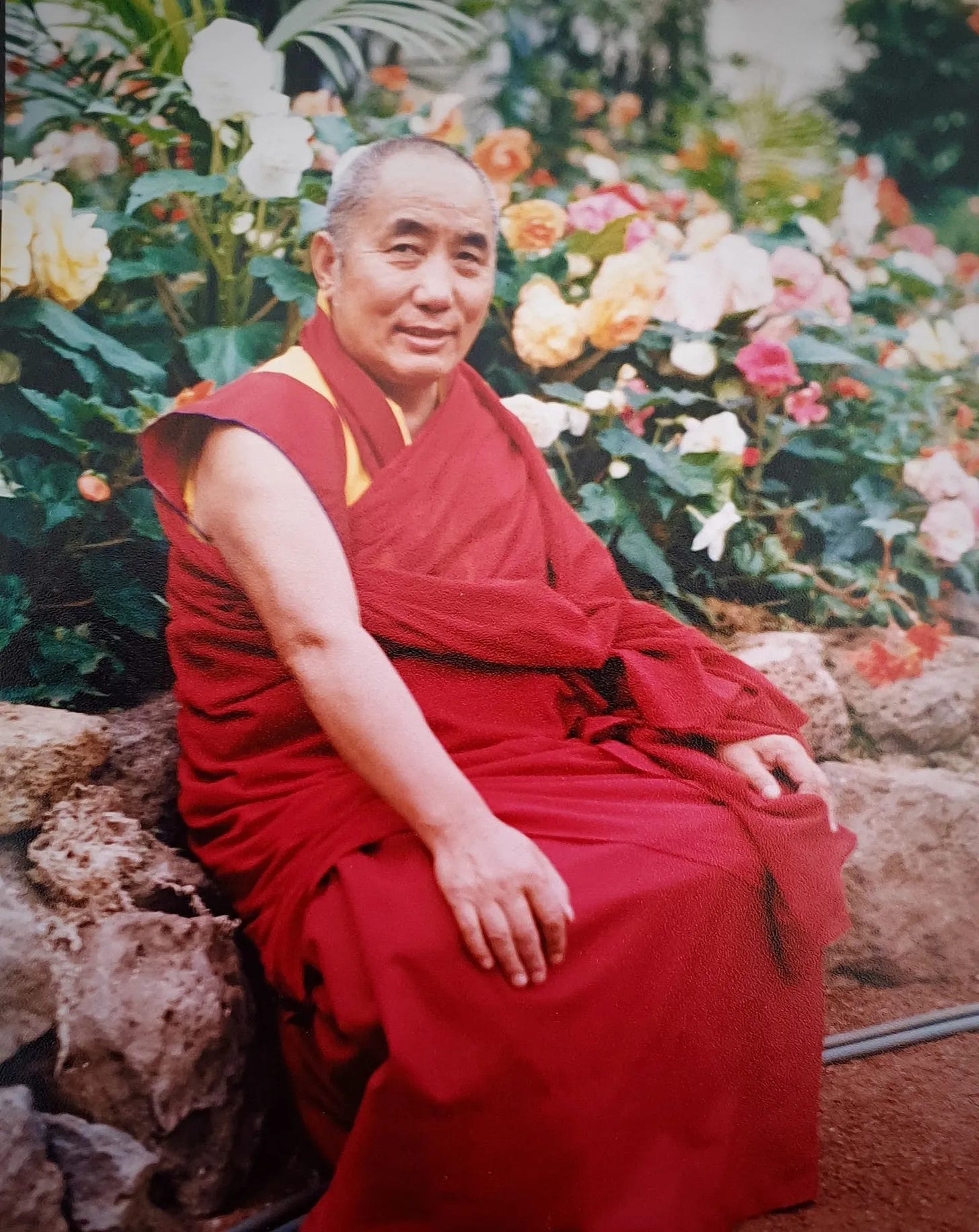
Photo: Geshe-la created beautiful gardens at the centre and loved feeding birds each day
Do good and be happy!
As a Geshe Lharampa, holding the highest academic degree in the Gelugpa tradition, by his mid-50s, with his own quarters, attendant and status at Denma College in Sera Je Monastery, Geshe-la was in line to be appointed abbot of one of the major monastic institutions. Despite his dazzling attainments, instead of resting on his laurels he chose, instead, to come to Australia, to teach ‘barbarians’ - my word, not Geshe-la’s - people with no understanding of the Dharma and certainly none of the instinctive reverence for lamas in a Tibetan community.
In the early years, far from being the one being waited on, there were times when this exalted lama and scholar waited on his own students, carrying meal trays to their rooms in the evenings and trying to coax them to come to class later. Having arrived knowing little English and with no money, under his leadership the Tibetan Buddhist Society went on to acquire two significant properties near Melbourne and Perth respectively, building two traditional Tibetan temples and retreat centres.
A powerful Dharma practice is not, in any way, contradicted by happiness and success in the conventional world. Geshe-la’s life was a showcase of just this. As his centres became more established and he had many long-term students, he often received financial contributions, which his students would put into a savings account. He used the money for many donations including a marble floor to his college temple back in India.
On another occasion he took out all the savings and had them exchanged into Rupees – mysteriously, forex deals always seemed to work decisively to his advantage – which he then handed out when he visited the monks in his monastery back home. “Look!” he would show his empty savings account gleefully to those visiting him after his latest India trip. “I gave away all the money!” Generosity, like other subjects in the Dharma, wasn’t just to be studied, but practiced. Being rich is a good thing if it empowers you to help others.
The material world really did seem to Geshe-la like the sport of appearances. And in this dream-like state between birth and death, if you have the good karma to enjoy a smart car, beautiful clothes or earthy pleasures, then go for it!
That said, Geshe-la also showed us to be sensitive to others’ perceptions. Once offered a lift by a Mercedes-driving student to an official event, he opted instead to be taken in a Toyota. Discernment is also necessary.
Dharma works!
When students went to Geshe-la for advice, as they did on all manner of things, there was often a familiarity about what he told them. Sooner or later we would find that he had been quoting from the Lam Rim (Path to Enlightenment) or one of his Vajrayana texts. Given his facility with the Dharma, perhaps arising from years of debate practice, he knew exactly which instruction to apply to any given situation and could access and articulate it immediately.
Dharma wasn’t only to do with meditation and study, for Geshe-la It is a 24/7 undertaking. It’s hard to express the degree of matter-of-factness with which Geshe-la dispensed advice. He had a way of cutting through all our ‘on-the-one-hand versus on-the-other’ over-thinking. The Dharma outlines steps to be taken on one’s own, personal journey, and if you follow the steps, you get the results. Simple – if not necessarily easy.
In death as well as life, Geshe-la demonstrated that Dharma works. I wasn’t present at his death, but I am told that his was a textbook illustration of how to die according to the Vajrayana instructions at which he was such a seasoned practitioner.
Before passing away in 2011, Geshe-la left directions about locating his reincarnation, to be known as Loden Rinpoche. After consultation with His Holiness the Dalai Lama, a search was conducted in Ladakh, a province of India. In July 2023 Loden Rinpoche was identified by His Holiness as the son of a Tibetan nomad family living in that region.
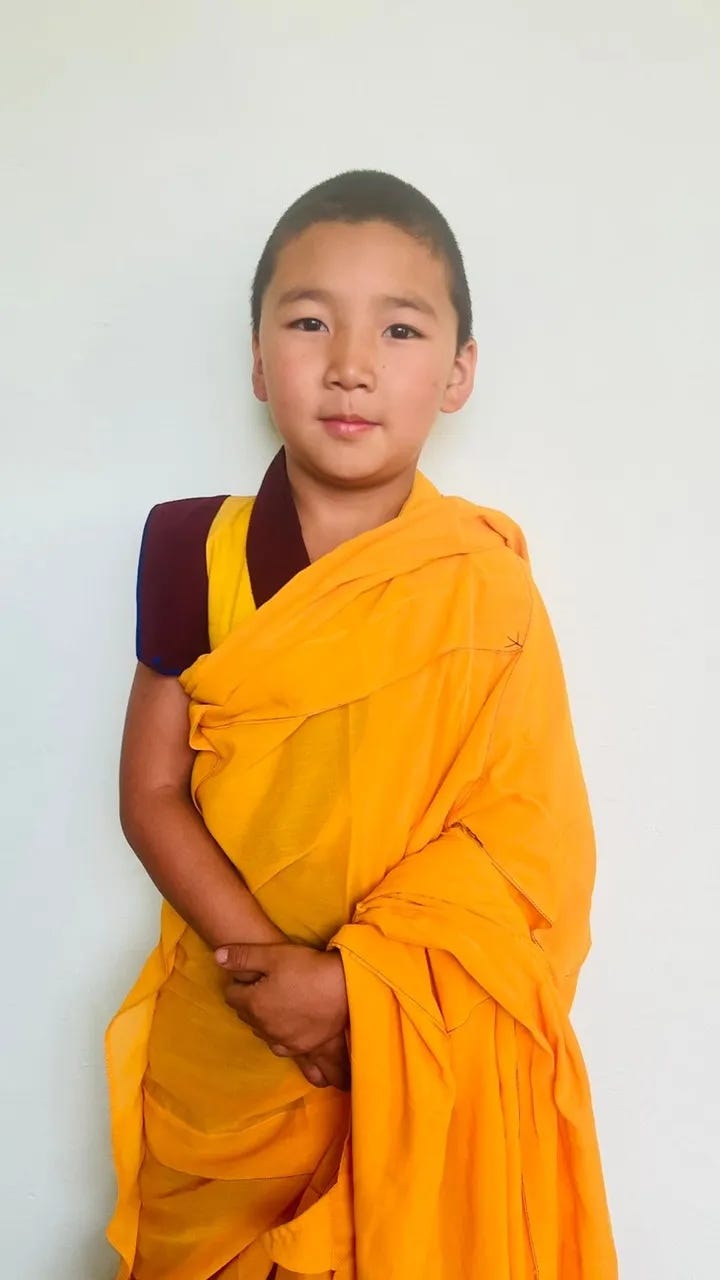
Geshe-la’s reincarnation: Loden Rinpoche
Geshe-la’s reincarnation, Loden Rinpoche, was enrolled at Sera Je Monastery in February this year and has commenced his monastic education. This includes contemporary subjects such as English language, science and mathematics, and also traditional Geshe studies.
In the same matter-of-fact way that he lived, Geshe-la showed us how to navigate death and rebirth. If he had chosen, he could have remained in a transcendent state beyond conventional reality. But, through compassion he has come back, once again, to turn the wheel of the Dharma. And shown us how to navigate just such a path ourselves.
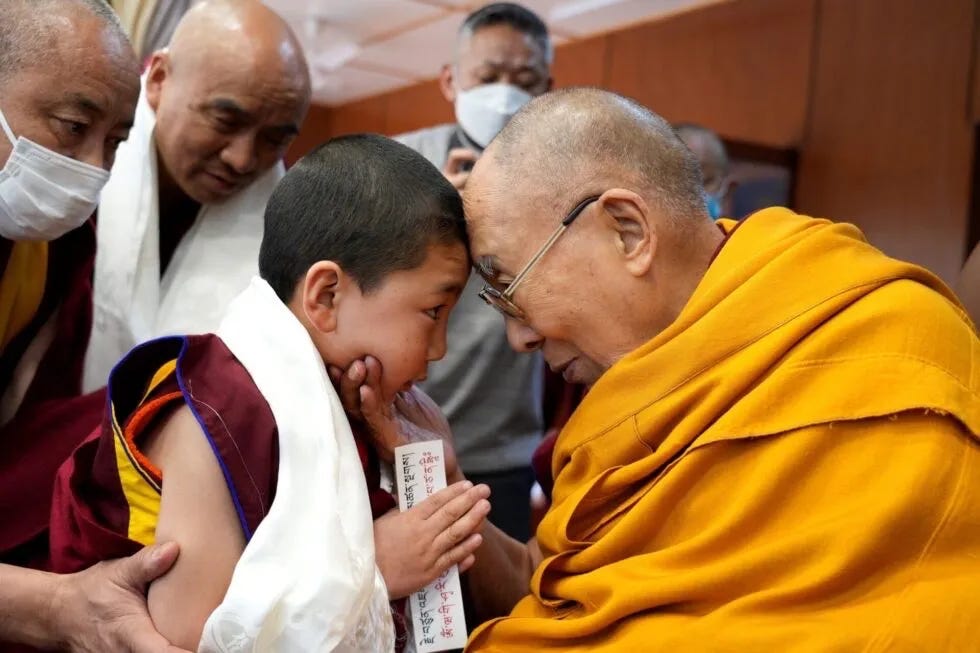
Photo: Loden Rinpoche meeting the Dalai Lama for the first time in this life
Summary
For me, more than anything, Geshe-la showed us that with effort and application, anything is possible. His own life was the most extraordinary illumination of this. At a time of life when many people are thinking about slowing down, he arrived in a new country, unable to speak the language, and step by step accomplished the most extraordinary things: the translation of nine core texts, equipping his students with all we need to attain enlightenment; the establishment of Dharma centres in several Australian cities; outreach programs to help others – he was always keen to emphasise that Buddhists, first and foremost, should be helpful members of the community.
Geshe-la always came across as practical and grounded, showing us, by example, that our inner life is never to be casually shared. Yet he was a master of the most esoteric practices of our tradition, and around him, apparently magical things would happen.
His death and reincarnation did more than show that Geshe-la was no ordinary being. They were also evidence that Dharma works! For me, his greatest teaching was that with diligence and effort, we, too, can be like him.
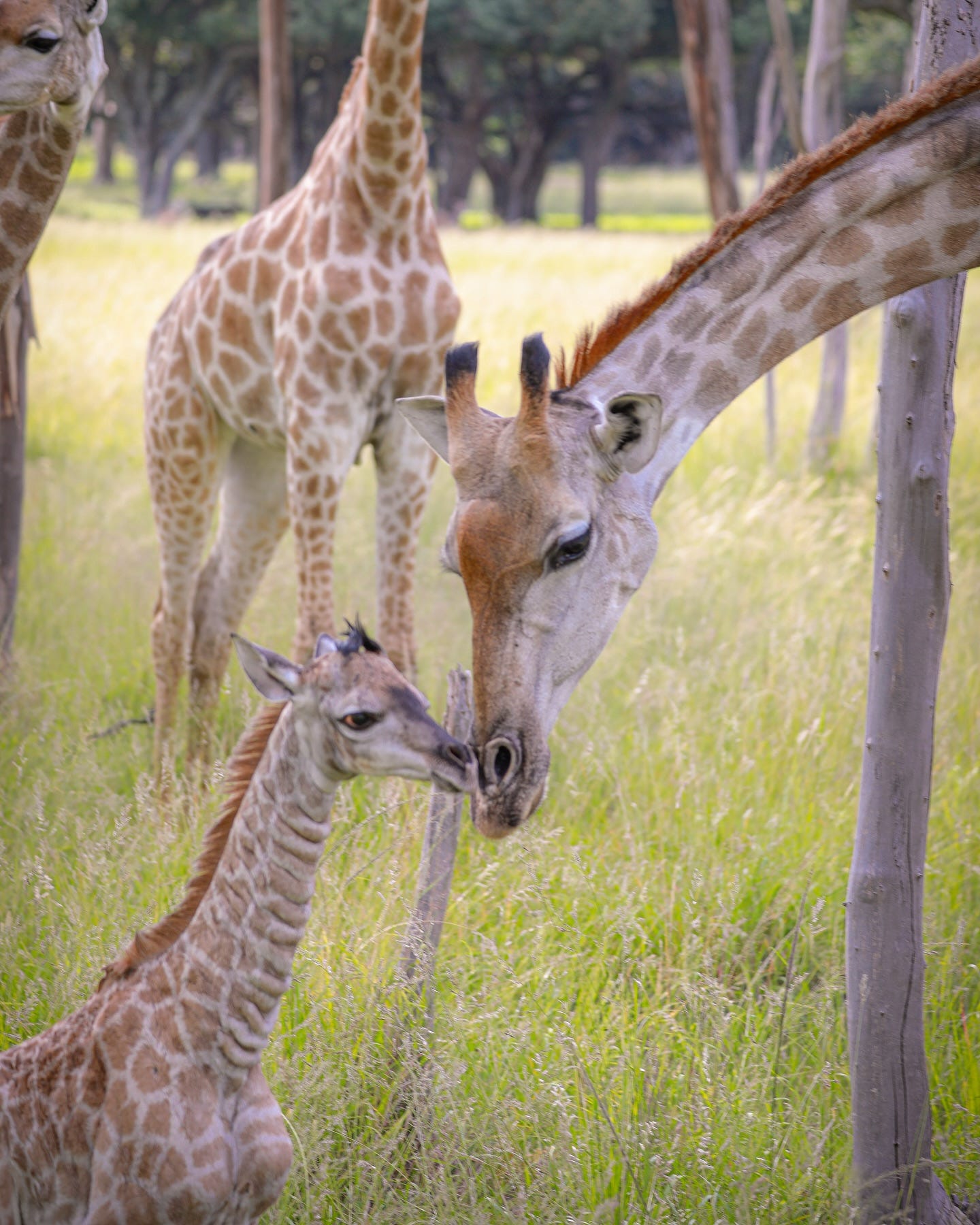
I am delighted to share some images from Wild is Life/Zimbabwe Elephant Nursery, who we collectively support. It is late summer in Zimbabwe and we have just been through calving season. Always a joy. There are no words for connections like these …
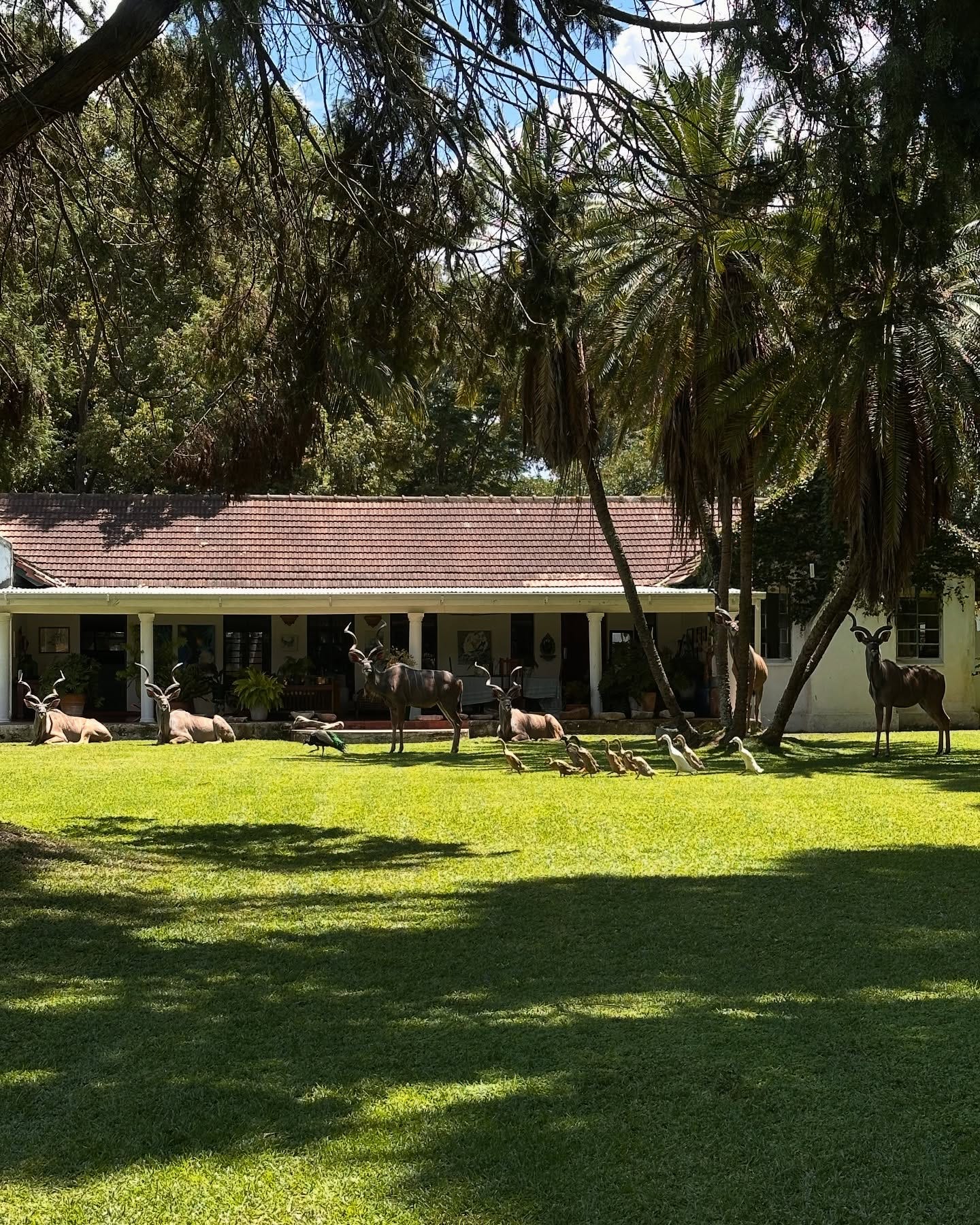
Imagine coming out of your house and finding a small herd of kudu on the lawn! Kudu are such still, poised antelope with the most majestic curved horns.
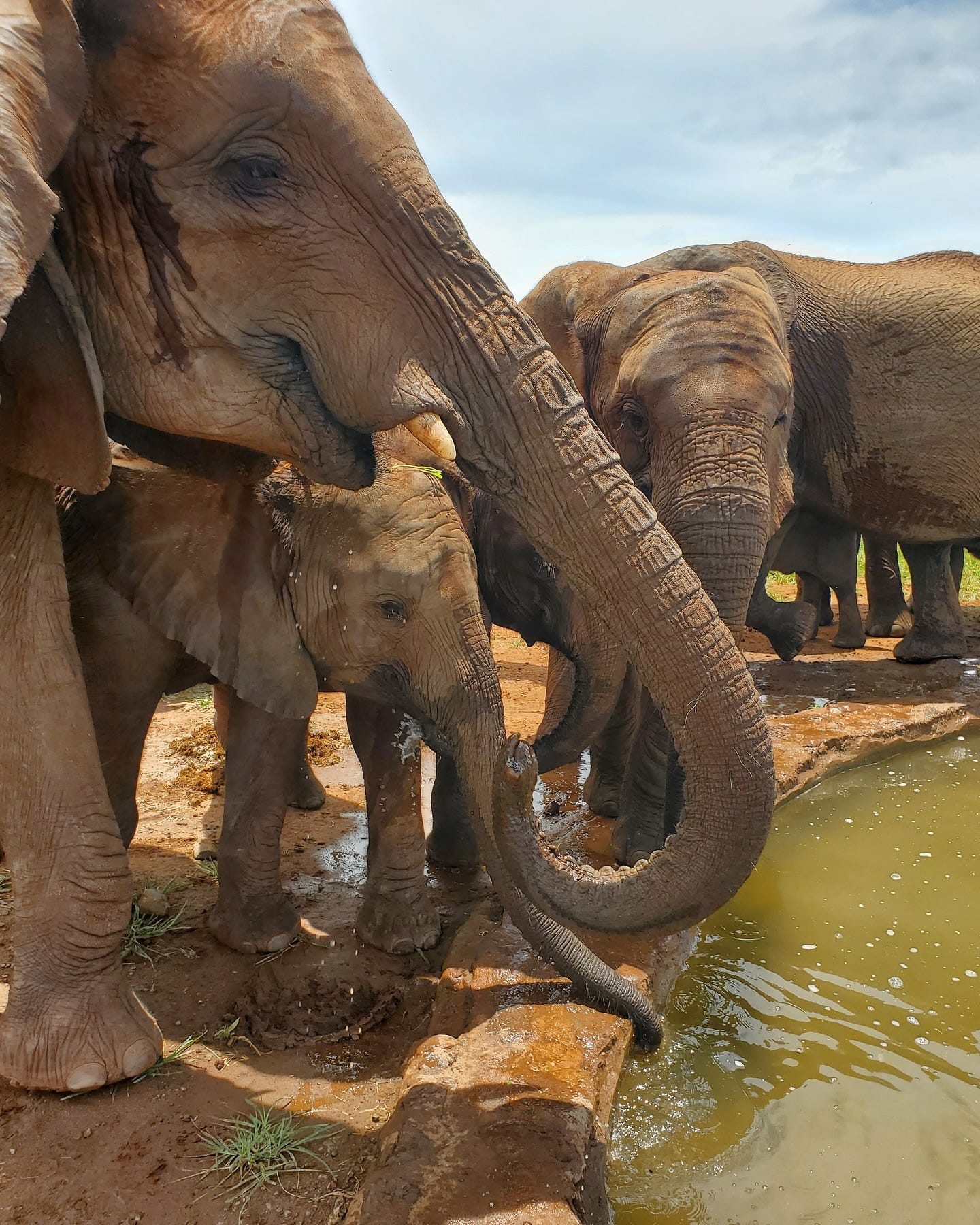
On a hot summer’s day, there’s nothing like a cooling drink for the family at the watering hole.
Thanks to all my subscribers for helping these precious creatures!
There is something about your words, the way you write, the genuine transmission of your heart and what you have received from your teachers Les & Geshe-la, that immediately transports me to my teacher Anyen Rinpoche. I just reach my hand up to gently touch that amazing karmic river flowing and I am there—heart spilling open—with you, your teachers, Rinpoche and the sangha, the animal sanctuaries, everyone, and it is all so lovely!!! Thank you for YOUR skillful words, you hit the target every time.
Dear David, i realized just now how much reading your weekly messages helps keep me grounded in this increasingly chaotic world.
Heartfelt thanks for being here.