
The Snack Box realisation
And an update on Juno at Twala Trust!

I am writing this week’s post from Harare, Zimbabwe, having just returned from another wonderful Mindful Safari at Victoria Falls. I’ll be sharing an update on that experience in the coming weeks. I’ll also be telling you about an exciting new development: from 2027, Koala and I are adding Mindful Matopos to our time here, taking advantage of the extraordinary vistas, ancient rock art and remarkable spiritual energy of the Matobo Hills, a UNESCO World Heritage Site.
Interestingly, in the past week two different people have asked me: “Do you still do Mindful Safaris? I never see them advertised.”
Yes, we certainly do! And I guess the reason we don’t promote them more widely is that there are only ten rooms available, and they tend to book out quickly with people on our Priority List.
If you’d like to have your name added to the Priority List and be among the first to hear about the 2027 Mindful Safari season — including Mindful Matopos — please email Koala at safari@davidmichie.com. She will be in touch with you in early September, when we’re back in Australia.
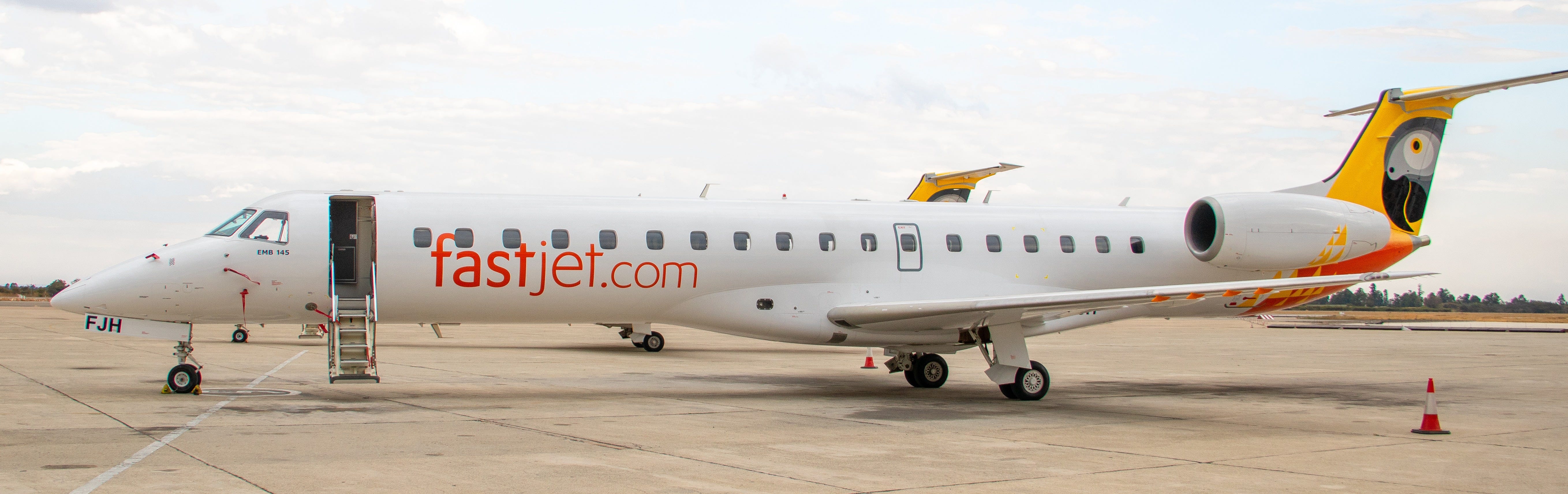
On the 50-minute Fastjet flight from Victoria Falls to Harare, every passenger receives the same mid-afternoon refreshment: a bottle of water and a little cardboard Snack Box. Inside is fruit juice, a few savoury nibbles and a thick, rather dense biscuit.
I’m guessing most passengers have only recently finished lunch. Yet almost everyone accepts the Snack Box. By the time we land, very few have been opened. Instead, they’re slipped into carry-on bags. And not to eat later.
Just beyond the airport terminal is a city full of people who would be genuinely delighted to receive it.
I’m not sure where all the Snack Boxes ended up after our flight, which was full of employees from a Harare accountancy firm returning from a corporate weekend in Victoria Falls. But before I even reached our Airbnb, my own box had found a new owner: a young boy begging at the traffic lights on Enterprise Road.
“God bless you,” he said, with a relief that felt disproportionate to the value of what I’d just given him.
In Buddhism, we often speak about realisations. A realisation isn’t simply understanding an idea. It’s when an insight becomes so vivid that it changes how we naturally behave. Much of the Buddhist path isn’t about accumulating knowledge. It’s about allowing truths to sink deeply enough into our hearts to transform us.
Meditation retreats help create the conditions for such moments. But they are not the only way. Sometimes I think one of the quickest paths to certain realisations is to spend time in Africa.
One of the earliest contemplations on the Buddhist path is recognising the extraordinary privilege of having what is called leisure and fortune. Leisure means the freedom to devote some of our lives to inner development. Fortune means possessing the inclination to do so – specifically to the Dharma.
When you live in Australia, Europe or North America, this realisation can remain quite distant. Almost everyone around us appears to have leisure. People spend hours watching television, scrolling social media or pursuing hobbies. Disposable time doesn’t feel especially remarkable because most people seem to have at least some of it. Many have a lot.
Zimbabwe gently dismantles the illusion that a life of leisure is in any way normal. On the way from the airport, you may well discover that the driver who collects you also has a job installing solar panels and inverters. He trades mung beans on the side. On Saturdays he helps his wife run a market stall. Every spare moment is spent trying to create another income stream.
He has to. With unemployment estimated at around 90%, Zimbabwe has become a vast gig economy. There is little in the way of unemployment support or public healthcare. Even highly capable, well-educated people can find themselves begging at traffic lights should something in their precarious existence go awry.
And Zimbabwe is far from unique. For much of humanity, this is simply life.
Statistics can tell us that the wealthiest 1% own roughly half the world’s wealth while the poorest half of humanity share only a tiny fraction of it. Those numbers are easy to skim over. Far harder to ignore is sitting at a set of traffic lights looking into the eyes of someone for whom a Fastjet Snack Box is a meaningful gift.
But what unsettles me most isn’t so much the poverty. It’s the joy.
While every individual is different, and we can never presume to know another person’s heart, it is difficult not to notice the warmth, humour and resilience that is woven into everyday life here. There is laughter. Singing. Dancing. A remarkable capacity to celebrate life despite circumstances that many of us would find overwhelming.
It makes me wonder. What is the point of being rich if we never really feel rich? What is the point of having leisure if we experience only stress, busyness and exhaustion?
Coming to Zimbabwe gives me the kind of insight I can’t imagine having any other way. It reminds me—not intellectually but viscerally—how extraordinarily fortunate I am. Not fortunate only because I have more stuff. Fortunate because I have choices. Time. Agency.
Curiously, I seem to lose sight of that abundance when I return to the developed world. Surrounded by people with similar lives, my own good fortune fades into the background. Until I come back.
Then there is that other curious paradox. While greed and selfishness are certainly on conspicuous display here, so too is generosity.
The African idea of ubuntu—I am because we are—isn’t merely a philosophy. It is something you repeatedly glimpse in everyday life. Adult children endure enormous hardship working in distant countries so they can send money home to ageing parents. Unexpected windfalls are shared. Families absorb neighbours. Communities carry one another. All in line with the Dharma idea of interconnectedness.
Which makes me wonder about those untouched Snack Boxes. I suspect a large percentage will never be eaten by the passengers who accepted them. Instead, they’ll find their way into the hands of people who will probably never, in their entire lives, set foot inside an airport, much less an aeroplane.
Among the deepest realisations we can make are those that don’t necessarily happen on a meditation cushion. Nor those that reveal some amazing new inner capacity. But the ones that reveal what has been there all along. A full fridge. Time to read. Time to meditate. The capacity to change, quite dramatically, the lives of others, with relatively little sacrifice or even effort.
These are such ordinary blessings that we scarcely notice them—until something helps us see them afresh. Including when that ‘something’ is a 50-minute flight in the middle of Africa, and a small cardboard box waiting to be opened.
AN UPDATE FROM TWALA TRUST ANIMAL SANCTUARY
During our visit to Harare, Koala and I had the chance to visit Twala Trust. I’ll be sharing much more in the coming weeks, but today I’d like to let you know about one of the dogs who has most engaged readers in the time she has been here - Juno.


Photos: Juno when she first arrived last November in such pitiful condition that many people thought the kindness thing for her would be to put her to sleep.


Photos: Juno today, nine months later - the proud owner of her own kennel and winter coat! Her eyes and skin have healed, mammary tumours have been removed, she is well fed, receives much love and attention and is such a gentle being. A testament, more than anything, to the power of love.
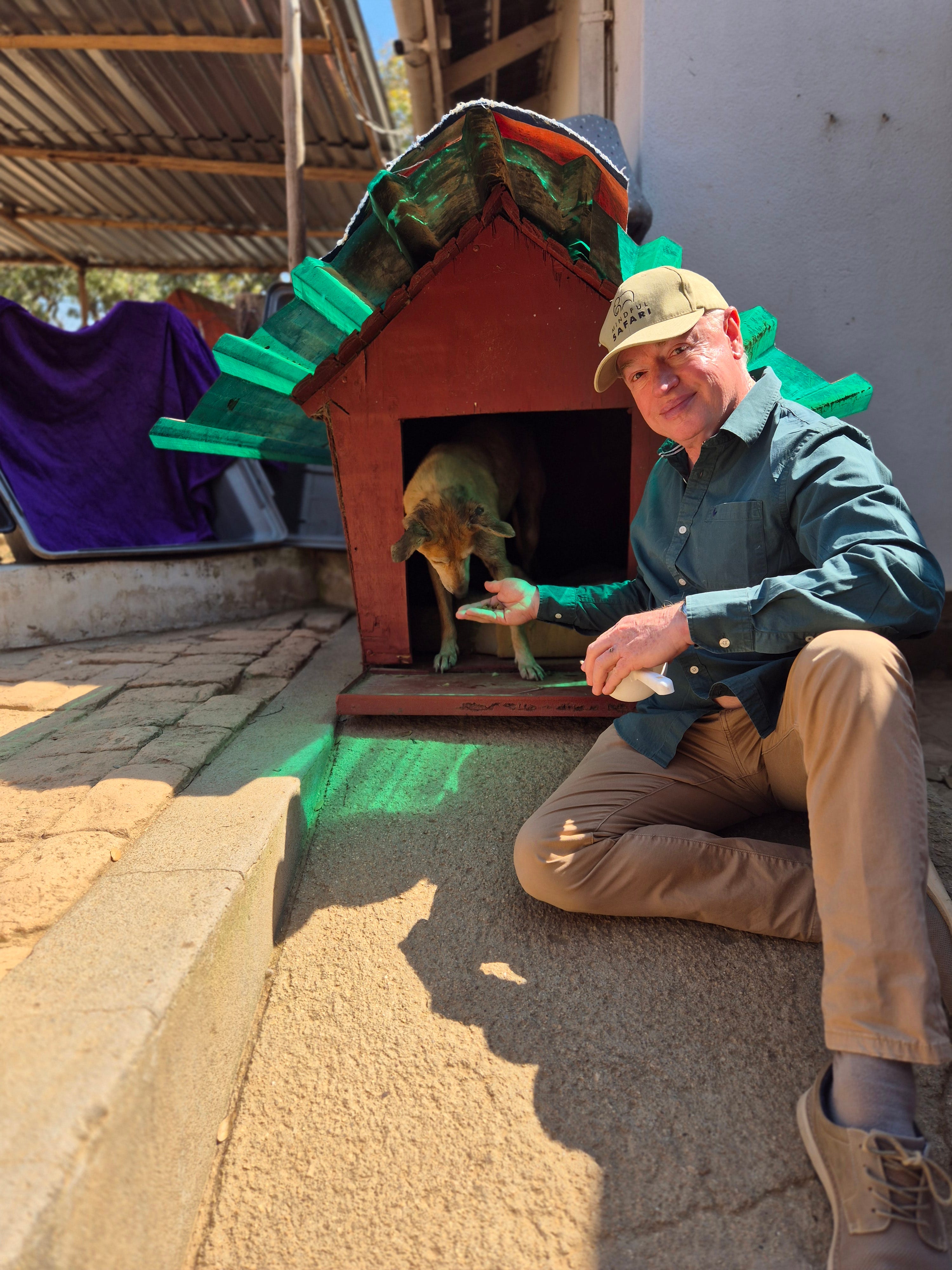
Photo: Coaxing Juno from her kennel
Video: meeting Juno. Such a special moment!
May all beings have happiness and the true causes of happiness!
May all beings be free from suffering and the true causes of suffering!
Lovely post, David, and I'm so happy to see Juno!
Yes. Zimbabwe provides many real lessons. I think it’s why I keep going back. And, of course for Twala and beautiful dogs like Juno. Thank you for this post. We are indeed very fortunate.